Technical Specifications:
| manufactured in | Australia |
| model year | 2022 |
| range (km) | 330 |
| speed (km/h) | 120 |
| power (hp) | 174 |
| battery (kWh) | 88 |
| cargo capacity (kg) | 1000 |
| drive type | RWD |
* Minimum price set by the manufacturer, excluding taxes and additional options

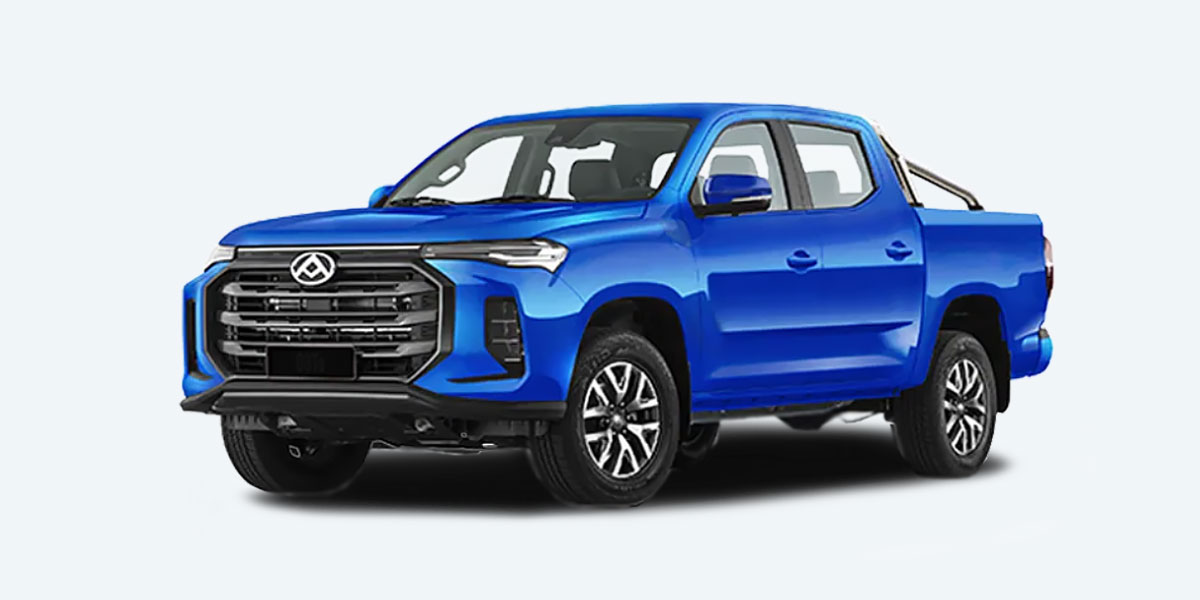
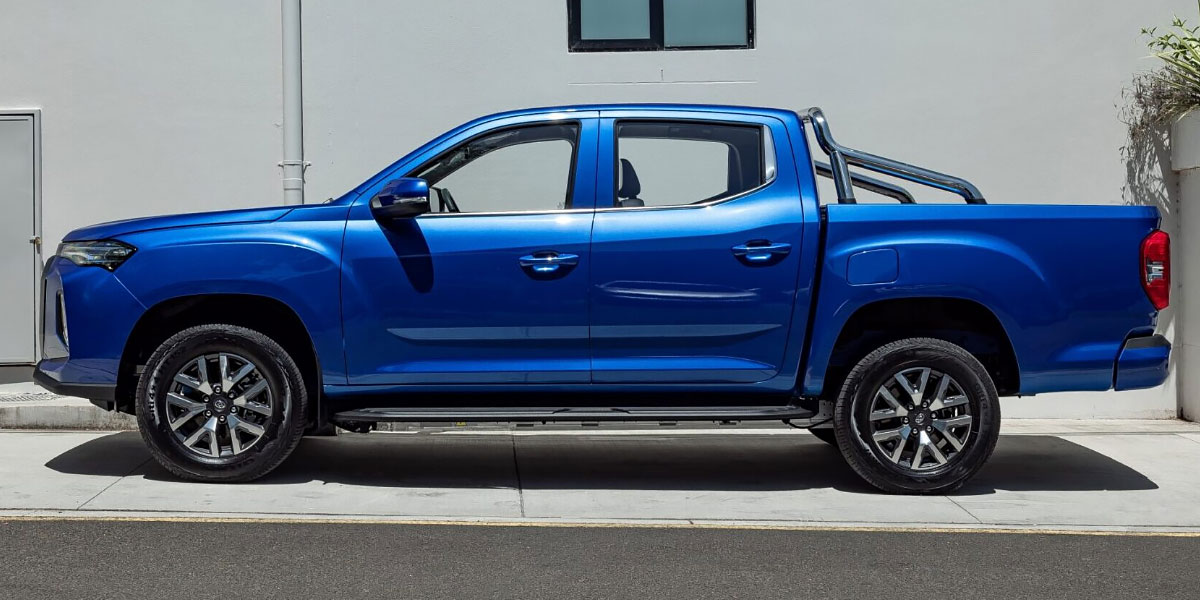
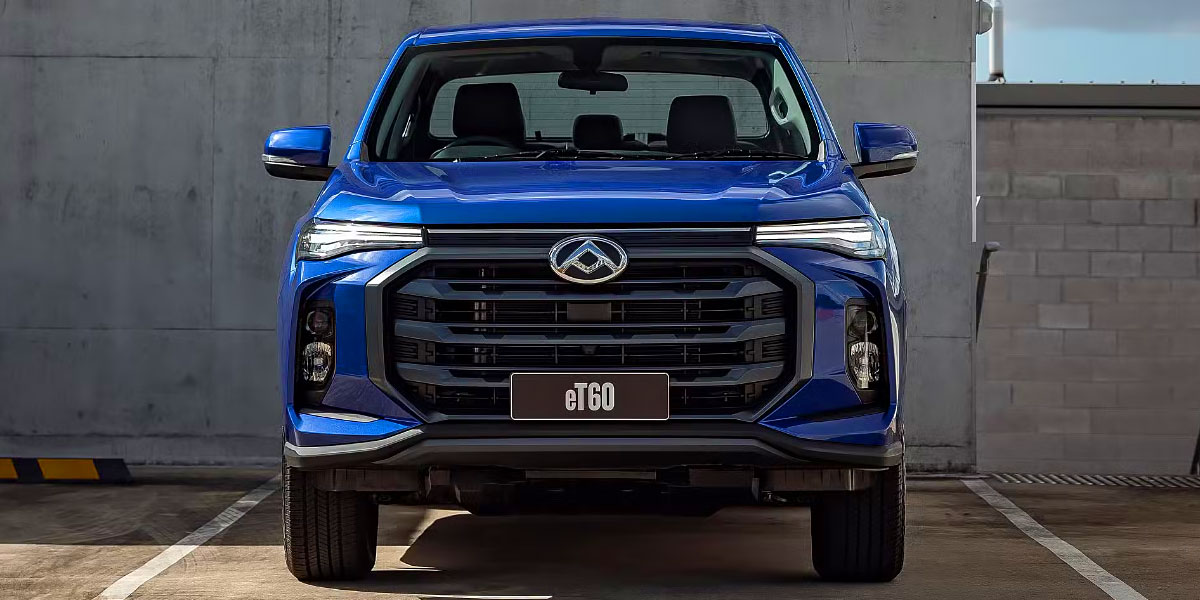
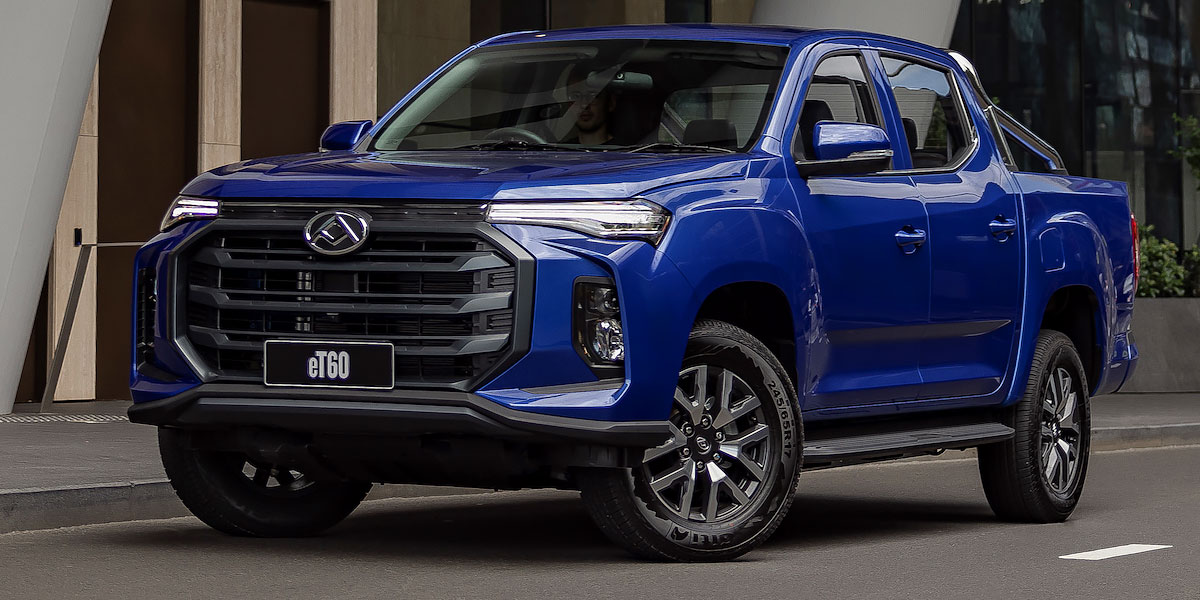
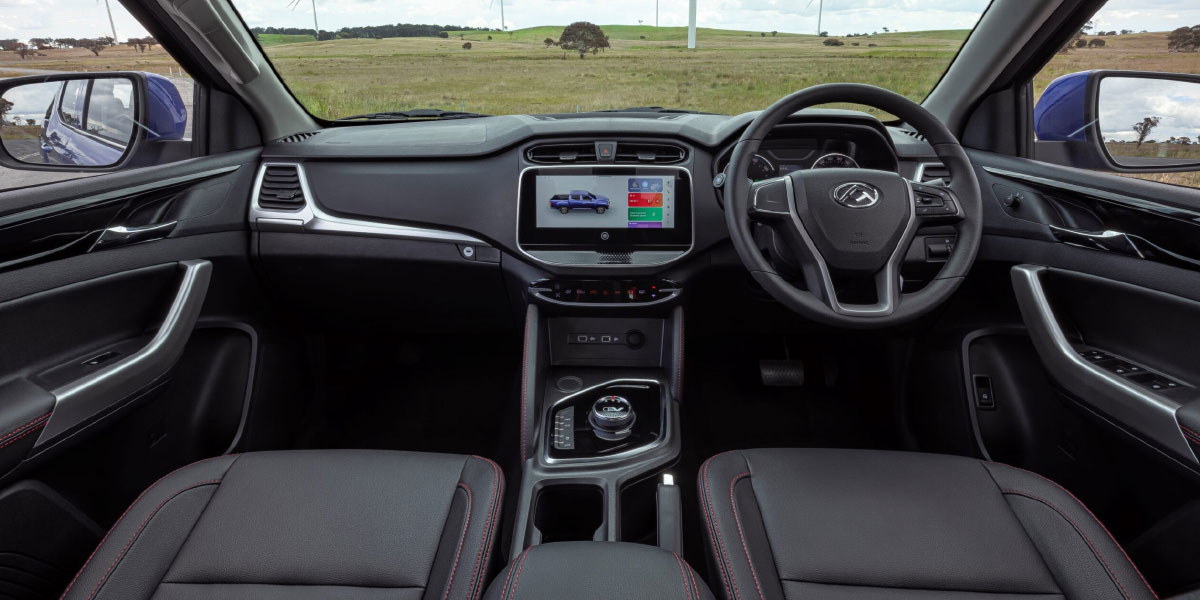
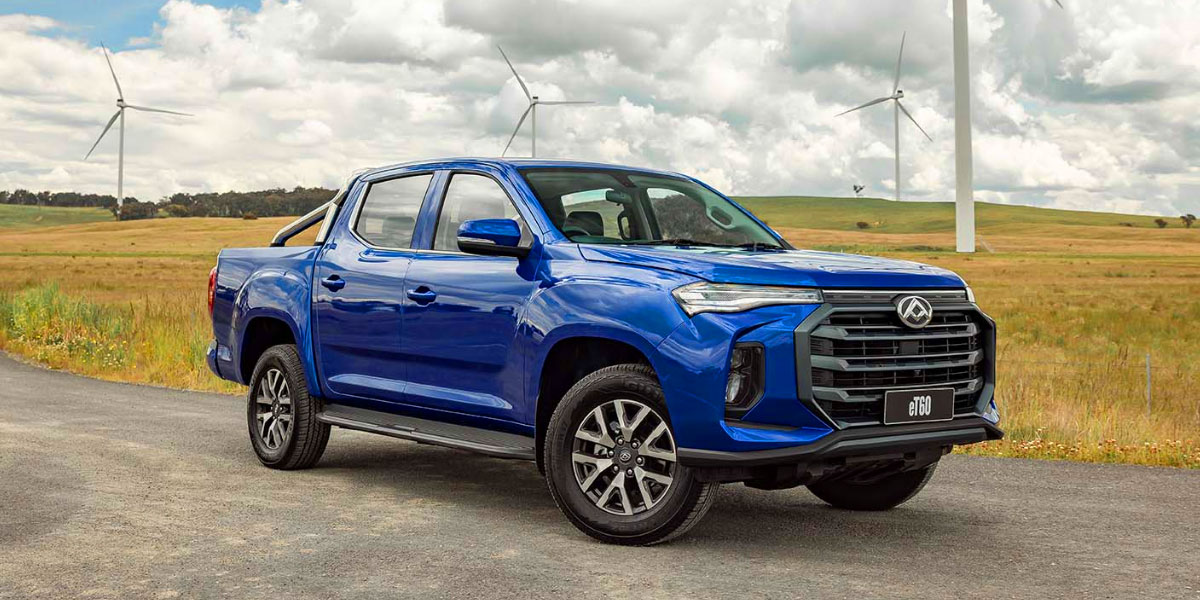
Exterior and Interior photos of LDV eT60 2022
LDV eT60: Australia’s First All-Electric Ute Built for Everyday Work
LDV eT60 didn’t stroll onto the EV scene quietly—it landed with the subtlety of a steel-toe boot on concrete. Touted as Australia’s first electric ute, this rig isn’t trying to win beauty pageants or drag races. It’s aimed straight at tradies and business buyers who want an eco-friendly ride without torching their budgets. Manufactured down under, priced from US$56,990 (£45,300 / €52,900), and launched in 2022, the eT60 tries to thread a tight needle: go green, haul gear, and still cost less than a Tesla power wall on wheels.
- Built by LDV, a subsidiary of China’s SAIC Motor Corporation, with production based in Australia
- Unveiled as Australia’s first battery-electric utility vehicle, entering showrooms in 2022
- Starting price: US$56,990 (approx. £45,300 / €52,900) for base RWD model
- Marketed as a work-focused, no-frills electric truck with green ambitions
Specs: What’s Under the Skin?
Battery and Charging
The eT60 packs an 88 kWh lithium-ion battery tucked beneath its load bed, juiced enough for a claimed 330 km (205 miles) on the WLTP cycle. That may not impress Tesla fanboys, but it’ll get you across town and back with room to spare. Charging? No DC fast charging here, so you’ll need to plan ahead—AC charging overnight from a wall box is the name of the game. LDV didn’t build this for road-tripping across the Outback—it’s a suburban hauler for the green-leaning workhorse.
- Battery capacity: 88 kWh
- Range: 330 km (205 miles)
- Charging type: AC only (no DC fast charging)
- Estimated charge time: ~9–10 hours on 11kW wall box
Performance and Payload
Powering the rear wheels is a 174 hp (130 kW) motor—no rocket launcher, but enough grunt for most urban work sites. Top speed maxes out at 120 km/h (75 mph), which means you won’t be setting Nürburgring records, but you’ll cruise highways without fuss. Cargo-wise, the bed swallows up 1000 kg (2204 lbs), which is right on par with traditional diesel utes. Towing’s off the menu—this isn’t your weekend camper-tow champ—but as a delivery mule? It gets the job done.
- Power output: 174 hp (130 kW)
- Drive type: RWD
- Top speed: 120 km/h (75 mph)
- Payload: 1000 kg (2204 lbs)
LDV doesn’t offer multiple variants—yet. Just the RWD single-battery setup. But expect more down the track, especially if demand keeps climbing.
Exterior and Interior: Work-First, Flash-Last
Exterior
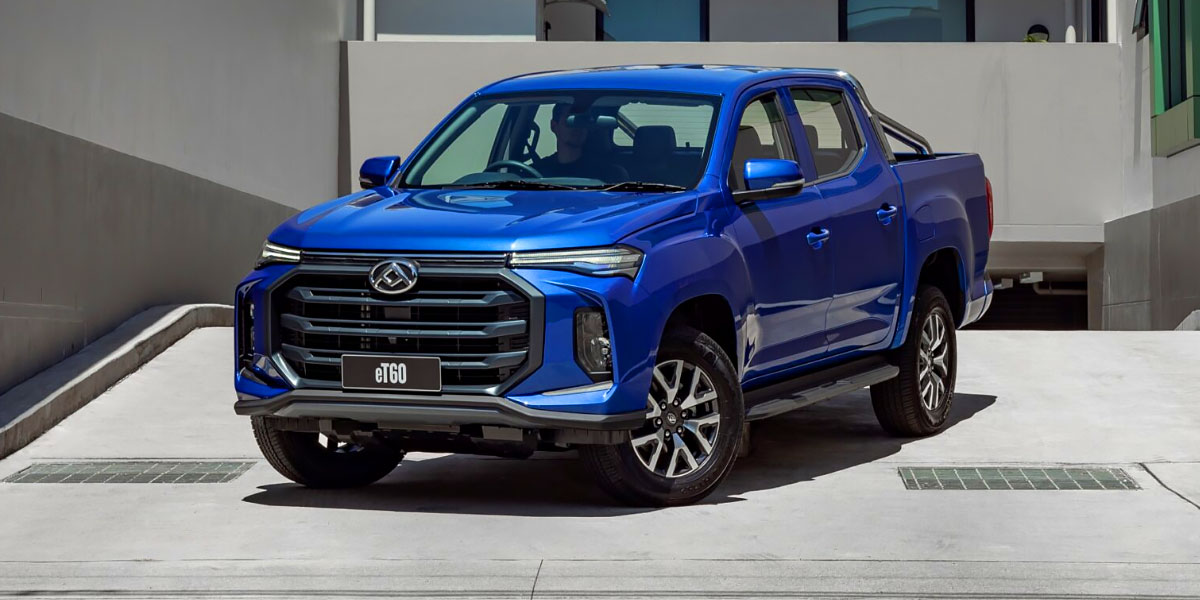
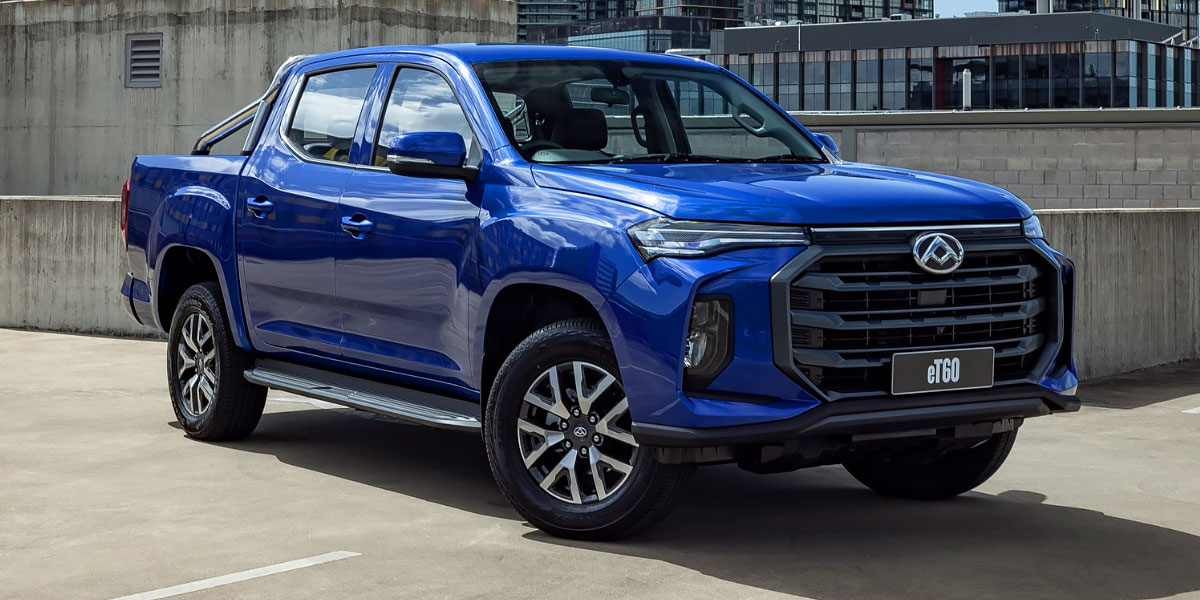
Looks-wise, the eT60 doesn’t scream “futuristic electric marvel.” It’s a mildly tweaked T60 Max with a new grille and no tailpipe. The proportions are traditional: wide stance, raised body, and a decent-size tray for gear. Color options? Mostly safe fleet favorites—white, grey, black. Don’t expect neon green or matte chrome here. It’s a blue-collar truck dressed for the job site, not the car show.
Interior
Inside, the cabin tells the same story: basic, functional, no-frills. Materials lean hard toward the plastic end of the spectrum. There’s a central touchscreen, but it’s not going to make a Mercedes blush. Seats are supportive enough, but don’t expect heated memory thrones. This is the electric workhorse you hose down, not one you detail with a toothbrush.
Pros and Cons:
Pros
- Affordable entry into the electric ute segment
- Decent 330 km (205 miles) range for urban and light regional tasks
- 88 kWh battery provides solid day-to-day usability
- 1000 kg (2204 lbs) payload suits commercial operators
- Backed by a 5-year/200,000 km warranty in key markets
Cons
- No DC fast charging severely limits long-distance flexibility
- Interior feels dated and low-cost
- Limited availability of parts and support in remote areas
- Unproven long-term reliability in Australian conditions
- Resale values currently trail behind mainstream rivals
Conclusion: Built for the Work Week, Not the Weekend
If you’re chasing an electric pickup that gets the job done without nuking your wallet, the LDV eT60 might just be your new fleet favorite. Sure, it’s light on luxury and can’t tow your boat, but for businesses chasing clean fleets and lower operating costs, it makes a compelling argument. And hey, someone had to build the first electric ute in Australia—LDV just beat everyone to it.
Manufacturer: LDV Automotive
Watch the Video Overview

Comparison:
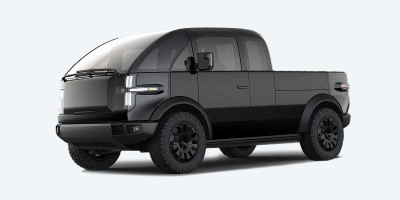
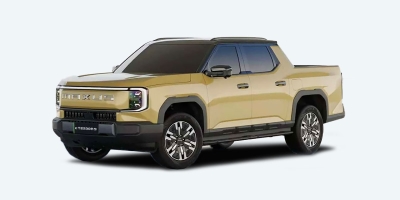
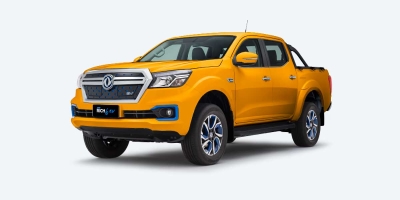
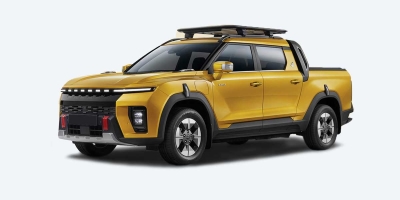
When you put the LDV eT60 next to other electric utes like the KGM Musso EV, Maxus eTERRON 9, Dongfeng Rich 6 EV, and Canoo Pickup Truck, it’s easy to see where it cuts corners—and where it shines. All live in the mid-tier EV truck bracket, but they take different roads to get there.
Range
LDV eT60 clocks in with 330 km (205 mi), trailing the Canoo Pickup Truck at 320 km (198 mi), but ahead of the Dongfeng Rich 6 EV at 305 km (190 mi). The KGM Musso EV hasn’t released final range figures yet, while Maxus eTERRON 9 stretches a bit farther at 350 km (217 mi).
Acceleration
Acceleration isn’t the eT60’s forte—it leans on its utility side. In comparison, the Canoo and eTERRON 9 are noticeably quicker off the line. The Dongfeng Rich 6 is similar to the eT60, prioritizing hauling over 0-60 times. The Musso EV promises mid-range acceleration with dual-motor potential.
Power
With 174 hp (130 kW), the LDV eT60 sits just below eTERRON 9 and Canoo, both offering outputs closer to 200 hp (149 kW). Dongfeng Rich 6 runs around 160 hp (119 kW), while the Musso EV hints at 190 hp (142 kW) from its twin motor layout.
Charging Time
The eT60 needs about 9–10 hours via AC charging. Canoo and eTERRON 9 support faster DC setups (under 6 hours), while Dongfeng and Musso EV are still finalizing specs but project 7–9 hours depending on voltage.
Price
Priced at US$56,990 (£45,210 / €52,890), the LDV eT60 is cheaper than Canoo (US$65,000), and well below eTERRON 9 (approx. US$72,000). Dongfeng Rich 6 EV lands closer at US$54,000, and the Musso EV is estimated around US$58,000, making the eT60 one of the more wallet-friendly entries in the group.