Windrose R700 EV 2026: Price, Range, and Technical Specs
The Windrose R700 EV is a full-electric Class 8 semi-truck with 729 kWh battery, 670 km range, and 1040 hp. Built for long-haul freight, it supports 800V megawatt fast charging and starts at $250,000 (£192,500/€227,500).


| Starting Price | $250,000 |
| Model Year | 2026 |
| Country of Manufacturing | China |
| Battery Size | 729 kWh |
| Official Range | 416 mi |
| Power | 1040 hp |
* Minimum price set for the base trim by the manufacturerr, excluding taxes and additional options

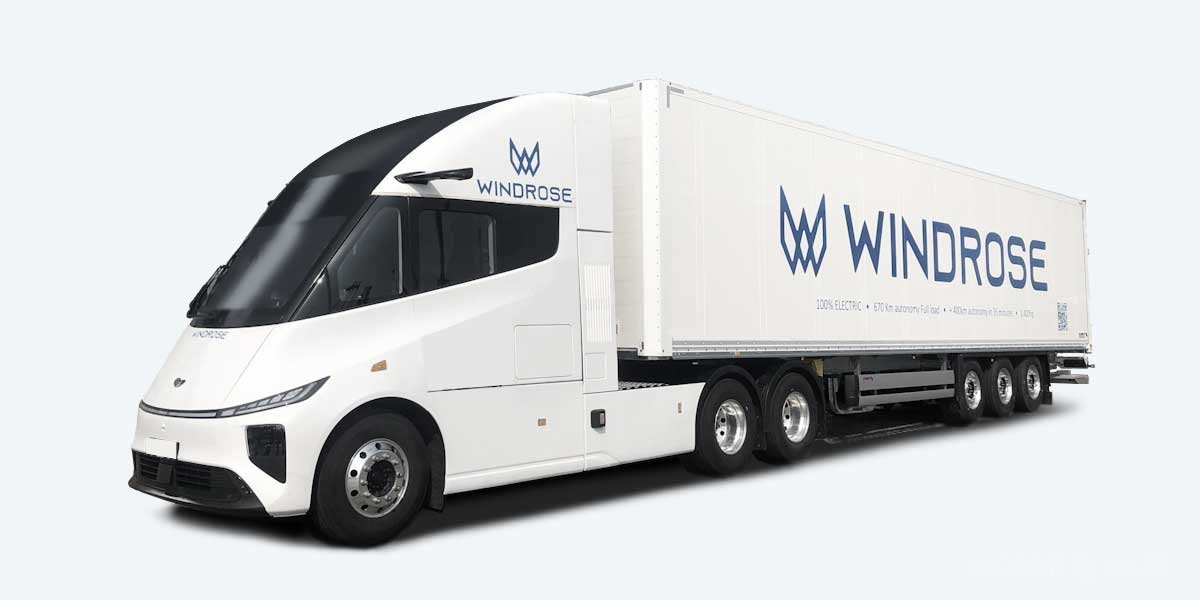
Exterior and Interior photos of Windrose R700 EV 2026

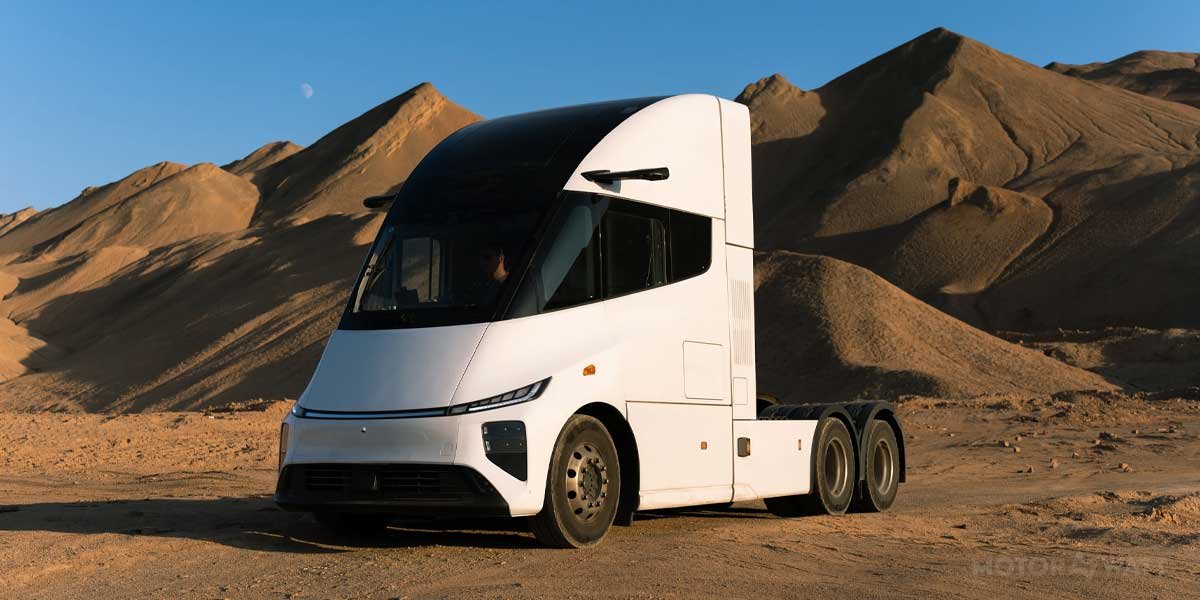

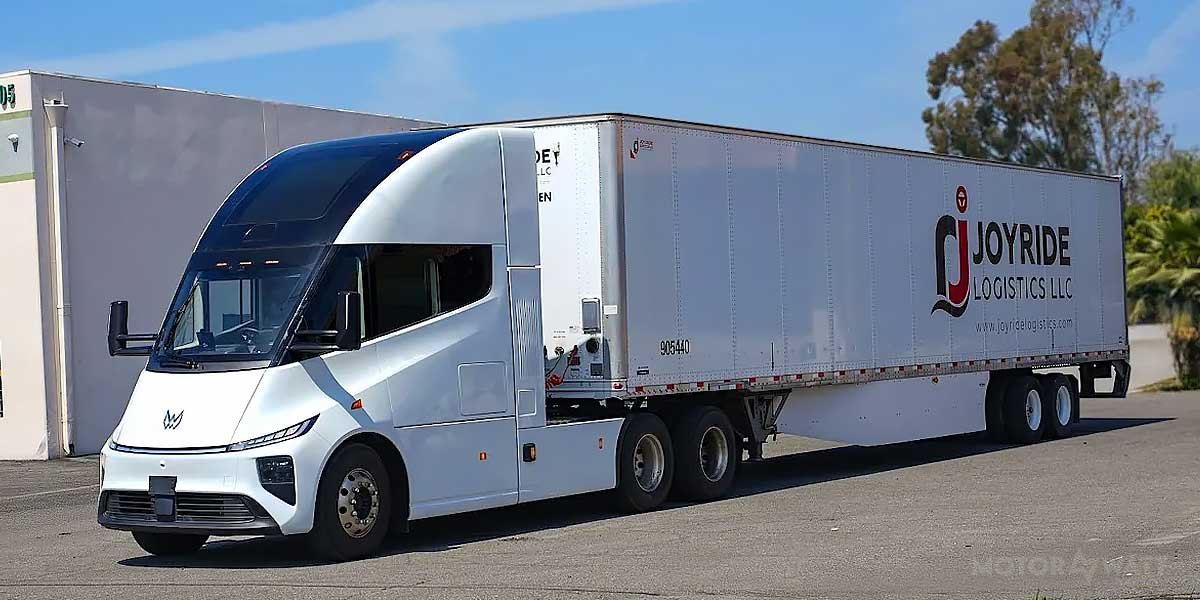
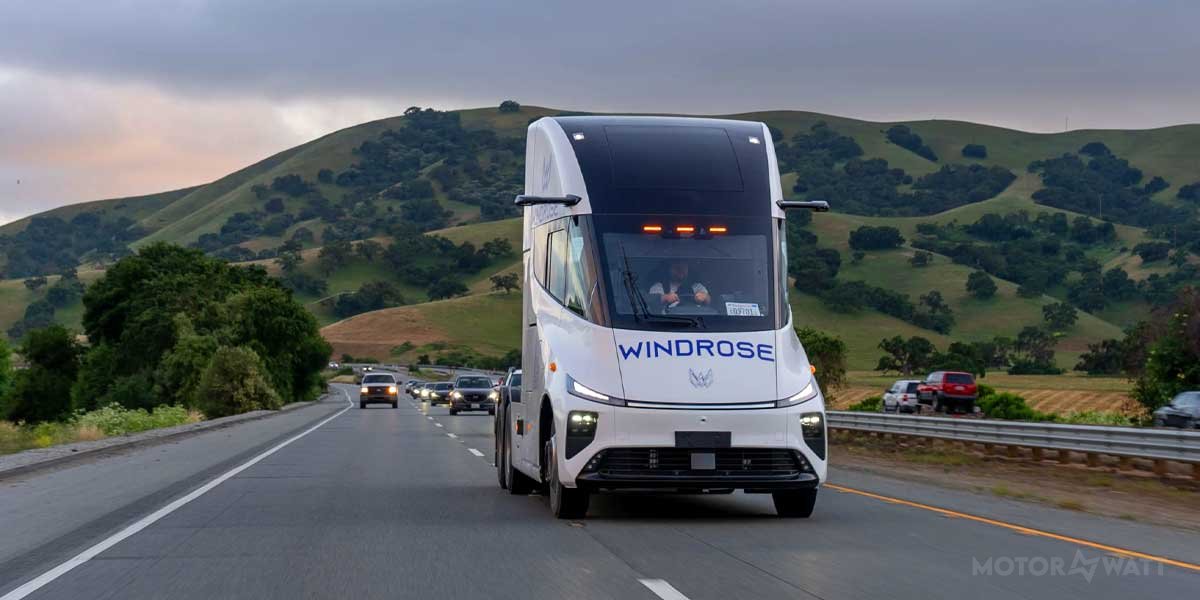
Windrose R700 EV 2026 Review: Early Impressions & Tech Analysis
Windrose R700 EV R700 EV Review & Introduction
Here comes the Windrose R700 EV, Windrose’s bold foray into long‑haul electrification. Built in China and launching globally in 2026, it delivers serious range and power for fleets. With its massive 729 kWh LFP battery and 670 km (~416 mi) haul readiness, it targets class 8 electric truck competitors head‑on. And priced around US$ 250,000 (£192,500/€227,500), it stakes a claim in high‑range logistics. From the outset, this electric heavy‑duty truck models what next‑gen freight transport can really be.
- Manufactured in China by Windrose; global sales start in 2026
- Unveiled to rival diesel giants and the Tesla Semi
- Starting price of US$ 250,000 (£192,500/€227,500) for entry model
- Market positioned for long‑haul EV freight and cross‑continental logistics
R700 EV Specs & Technical Details
Battery
Under the hood sits a 729 kWh lithium iron phosphate pack using an 800 V architecture. That supports a range of about 670 km (~416 mi) per full charge even under load. When you need to reload, megawatt fast charging adds roughly 400 km (~249 mi) in just 35 minutes via CCS1 or MCS plugs. Fleet electrification gets serious with infrastructure‑ready charging cycles built for uptime and megawatt speed.
- Battery capacity: 729 kWh LFP
- Range per charge: 670 km (~416 mi)
- Fast‑charge: 400 km (~249 mi) added in ~35 minutes
- Plug types: CCS1 and MCS compatibility
Performance
The powertrain features up to four motors driving the rear wheels in RWD configuration. Output reaches 1,040 hp (~775 kW) with torque peaking at 2,200 Nm. Acceleration and top‑end are capped at 110 km/h (~68 mph) for efficiency on long hauls. Cargo capacity handles massive payloads of about 49,000 kg, backed by consistent output in harsh climates from –30 °C to +48 °C. Reliability and raw hauling grunt in one package.
- Total motor output: 1,040 hp (~775 kW)
- Torque: 2,200 Nm
- Top speed: 110 km/h (~68 mph)
- Cargo capacity: 49,000 kg
A U.S. or EU homologation model is expected closer to the 2026 launch window, with potential local assembly to support volume deployment.
Exterior and Interior Features
Exterior
The cab has a drag coefficient around 0.2755, helping stretch that range further. It’s a unibody design built in partnership with Higer Bus and JAC, offering configurations in 6×4, 4×2, and soon 6×2 layouts for regional compliance. The stance screams utility, functional over flashy, but still futuristic in silhouette.
Interior
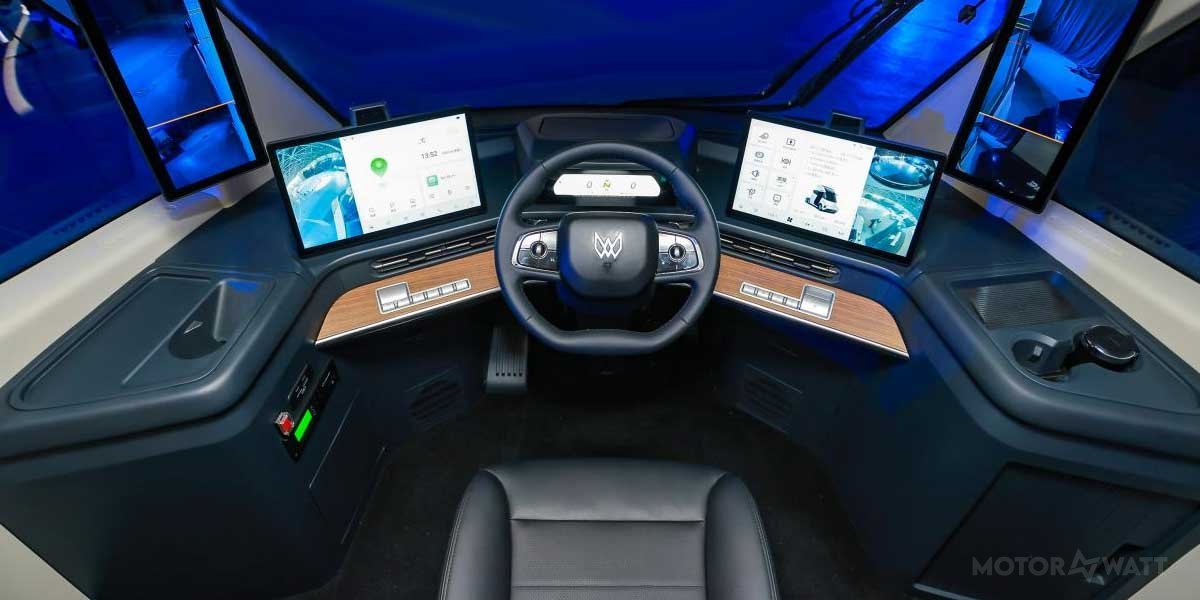
Inside, the cab centers on driver ergonomics and reliability. A digital interface supports fleet integrations and long‑haul scheduling. The layout prioritizes comfort and uptime over luxury—expect sparse luxury but strong reliability. Autonomous hardware (lidar, radar, cameras) is present to support future Level 4 operation.
Pros and Cons:
Pros
- Industry‑leading battery size and long‑haul range via electric heavy‑duty truck credentials
- Rapid megawatt fast charging adds 400 km in ~35 minutes
- High power output and torque ready for full‑payload climbs
- Global‑ready design with planned local assembly
Cons
- Not yet certified for U.S. or EU roads as of mid‑2025
- Production initially capped at ~40 units by early 2025
- Cab interior lacks premium touches often found in rivals
- Megawatt charging infrastructure still sparse in many regions
Conclusion:
And here’s the thing: the R700 EV delivers serious range, power and hauling capability wrapped in a fleet‑ready package built for the long haul. At £192,500/€227,500 pricing (US$ 250,000), it’s a compelling value play for logistics pros. Windrose engineered range, speed and utility into a global platform. If you’re looking for haul capacity, charging speed and future‑proof design, this truck answers hard questions.
Watch the Video Overview


Full specifications
Model Specs
| Specification | Actual Data |
|---|---|
|
Model
|
Windrose R700 EV
|
|
Model Year
|
2025
|
|
Manufacturer
|
Windrose Technology
|
|
Manufactured In
|
China
|
|
Vehicle Class
|
Class 8 Electric Semi Truck
|
Performance
| Specification | Actual Data |
|---|---|
|
Power Type
|
Full Electric
|
|
Powertrain
|
Dual Motor Electric Drivetrain
|
|
Drive Type
|
6x4
|
|
Peak Power Output
|
670 hp - 500 kW
|
|
Peak Torque
|
3,500 Nm - 2,581 lb-ft
|
|
Maximum Speed
|
120 km/h - 75 mph
|
Battery and Charging
| Specification | Actual Data |
|---|---|
|
Battery Type
|
Lithium Iron Phosphate
|
|
Battery Capacity
|
700 kWh
|
|
Nominal Voltage
|
800 V
|
|
DC Fast Charging Power
|
350 kW
|
|
Charging Time 20 to 80 percent
|
45 minutes
|
Estimated Range Data
| Specification | Actual Data |
|---|---|
|
Estimated Range
|
670 km - 416 miles
|
Body Specifications
| Specification | Actual Data |
|---|---|
|
Length
|
7,300 mm - 287.4 in
|
|
Width
|
2,550 mm - 100.4 in
|
|
Height
|
3,950 mm - 155.5 in
|
|
Wheelbase
|
3,900 mm - 153.5 in
|
Exterior Design Features
| Specification | Actual Data |
|---|---|
|
Cab Design
|
Aerodynamic high roof sleeper cab
|
|
Aerodynamics
|
Integrated airflow management
|
|
Lighting
|
Full LED lighting system
|
Interior Design and Materials
| Specification | Actual Data |
|---|---|
|
Seating Configuration
|
2 seats with sleeper berth
|
|
Upholstery
|
Commercial grade fabric
|
|
Cabin Focus
|
Long haul driver comfort
|
Cabin Technical Features
| Specification | Actual Data |
|---|---|
|
Driver Displays
|
Dual digital displays
|
|
Connectivity
|
Fleet telematics ready
|
|
Regenerative Braking
|
Multi level regenerative system
|
|
Driver Assistance
|
Advanced safety assistance systems
|
F.A.Q. about Windrose R700 EV 2026
What is the range of the R700 EV truck?
The R700 EV delivers up to 670 km (416 miles) of full-load range, supported by a 729 kWh battery pack.
How powerful is the Windrose R700 EV?
The R700 EV outputs 1,040 horsepower and 2,200 Nm of torque from its modular electric motor setup.
What is the top speed of the R700?
Its electronically limited top speed is 110 km/h (68 mph), optimized for long-haul freight efficiency.
How long does it take to charge the semi-truck?
Using megawatt-level fast charging, the R700 EV can add 400 km (249 miles) of range in just 35 minutes.
What is the cargo capacity of the R700 EV?
The R700 supports a maximum gross vehicle weight of 49,000 kg (108,027 lbs), matching typical Class 8 standards.
What is the price of the Windrose R700 EV?
The R700 EV starts at $250,000, which equals approximately £192,500 or €227,500 based on current exchange rates.
Does the R700 EV support autonomous driving?
Yes, the R700 is autonomy-ready with lidar, radar, and drive-by-wire systems prepared for Level 4 automation.
Where is this EV manufactured?
The R700 is manufactured in China, with localized assembly planned in Georgia (USA) and France for global markets.
Is this truck certified for U.S. and EU roads?
As of mid-2025, the R700 EV is awaiting road certification in both the U.S. and Europe, pending regulatory approvals.