Rictor Skyrider X1: Price, Range, and Technical Specs
Rictor Skyrider X1 is a 2026 electric flying motorcycle and personal eVTOL built in the USA. It features a 10.5 kWh battery, 40 km flying range, 180 km road range, and 50 kW peak power. Top air speed reaches 100 km/h, with flight time up to 40 minutes. Starting at $60,000 (€50,511), it targets urban commuters seeking dual mode road and air mobility.


| Starting Price | $60,000 |
| Model Year | 2026 |
| Country of Manufacturing | USA |
| Flying Range | 25 mi |
| Flying Time | 40 min |
| Battery Size | 10.5 kWh |
* Minimum price set for the base trim by the manufacturerr, excluding taxes and additional options

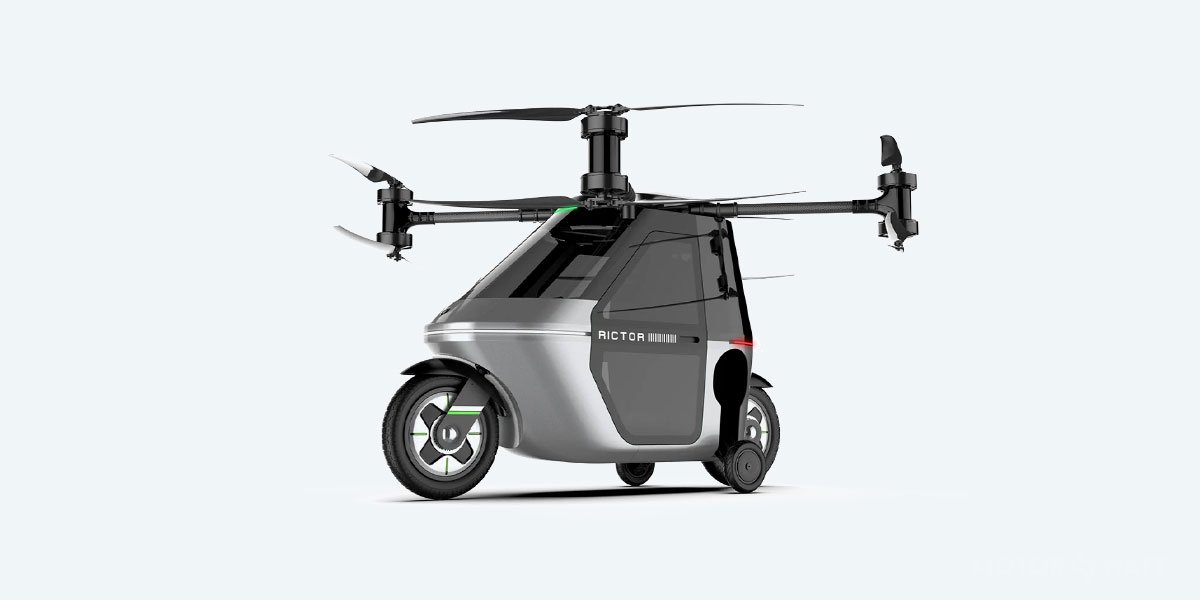
Exterior and Interior photos of Rictor Skyrider X1


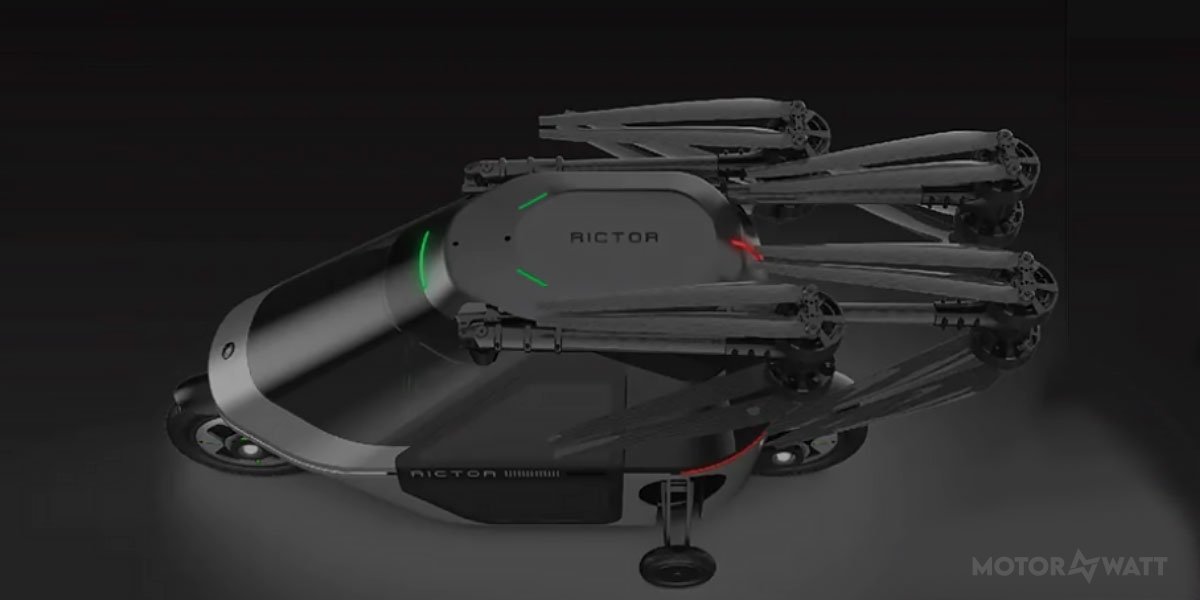
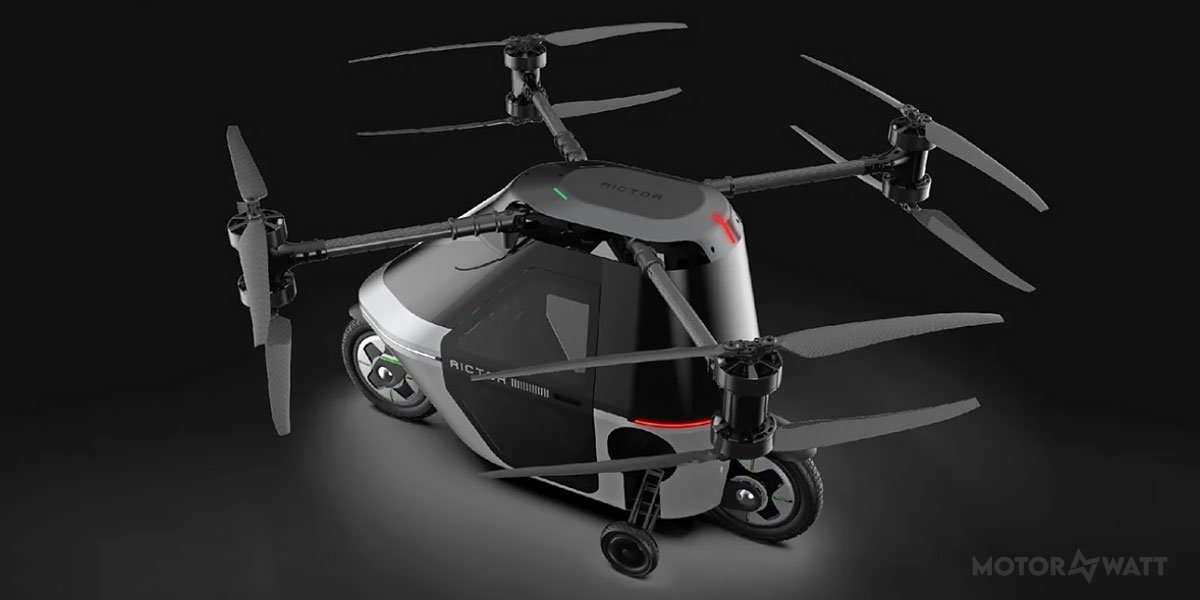
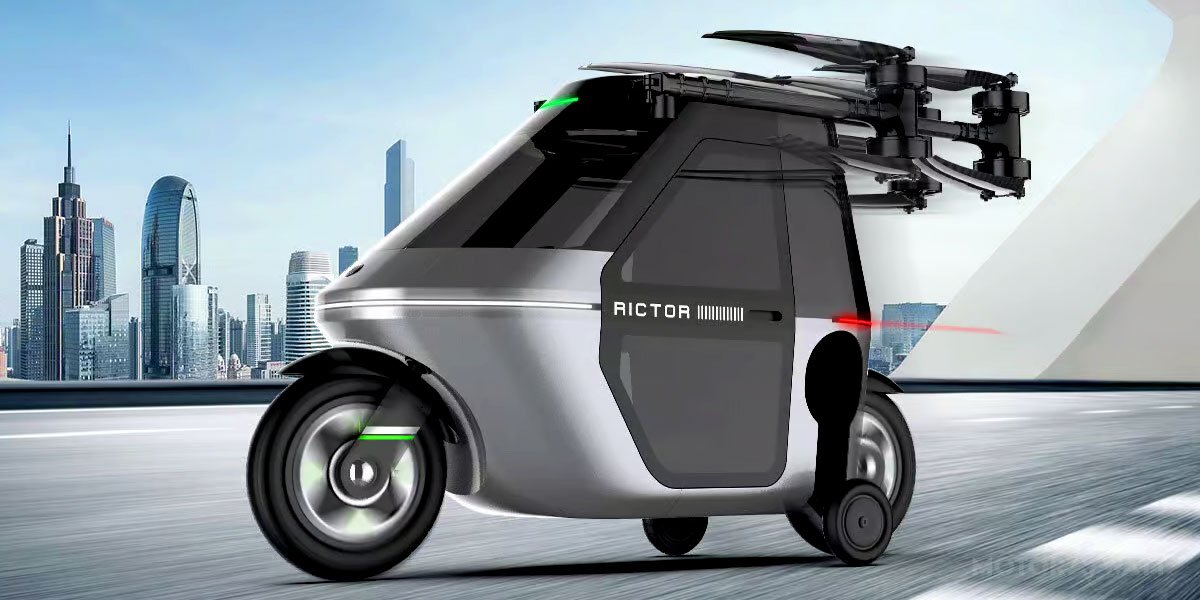

Rictor Skyrider X1 Review: Early Impressions & Tech Analysis
Rictor Skyrider X1 Introduction:
Rictor Skyrider X1 lands in 2026 as a production ready electric flying motorcycle built in the USA for solo commuters hungry for altitude. It enters the market as a compact personal eVTOL aircraft with a dual mode identity. On asphalt, it behaves like a nimble electric moped. In the sky, it climbs to 200 meters or 656 feet with automated stability. With a 10.5 kWh battery and 50 kW peak system output, it targets urban flyers who value speed and autonomy. And with a starting price of $60,000 USD (€50,511), it positions itself below most personal aircraft yet above premium electric motorcycles.
- Manufactured in the USA and unveiled at CES 2025 as an entry level urban air mobility solution.
- Model year 2026 launch aimed at tech adopters and advanced mobility enthusiasts.
- Base price starts at $60,000 USD (€50,511), undercutting many experimental eVTOL competitors.
- Dual mode capability allows transition from road travel to vertical takeoff flight within seconds.
- Compact 80 kg curb weight supports efficient lift and agile street handling.
How much does the Rictor Skyrider X1 cost?
The Rictor Skyrider X1 price starts at $60,000 USD (€50,511). That figure places it in the entry tier of the personal eVTOL segment while overlapping high end electric motorcycles and niche aircraft. For early adopters in Chicago, Los Angeles, or Shenzhen, that pricing signals accessibility in a field where many aircraft exceed $200,000.
| Trim Level | PRICE | KEY FEATURES |
|---|---|---|
|
SL Base
|
10.5 kWh battery, 40 km flying range, 180 km road range, 50 kW peak output, 100 km/h air speed, 70 km/h land speed, AI flight stabilization and enclosed canopy.
|
|
|
SX Extended
|
Enhanced battery mapping, improved endurance tuning, upgraded navigation software, extended operational envelope for urban aerial commuting.
|
|
|
X6 Professional
|
Professional grade flight control calibration, advanced redundancy systems, premium cockpit materials, enhanced payload and operational monitoring tools.
|
The trims primarily differ in endurance software tuning and advanced control systems. The SL base suits urban commuters seeking 40 km or 25 mile aerial hops. The SX stretches capability for longer operations. The X6 aims at professional pilots and demonstration fleets.
Engine, Battery, and Performance Specs:
Battery & Charging Specifications
The 10.5 kWh lithium battery powers both road and flight modes. Flying range reaches 40 km or 25 miles, while road range extends to 180 km or 112 miles. Charging via 50 kW DC fast charging replenishes from 0 to 80 percent in 30 minutes. That rapid turnaround keeps urban air mobility practical. Flight duration averages 40 minutes depending on payload and wind conditions.
- Battery capacity: 10.5 kWh
- Flying range: 40 km (25 miles)
- Road range: 180 km (112 miles)
- Fast charging: 0 to 80 percent in 30 minutes
Electric Motor Specifications
An eight propeller distributed electric propulsion system generates up to 50 kW peak power, equivalent to about 67 horsepower. DEP architecture micro adjusts thrust for stable lift. Carbon fiber and aviation grade aluminum maintain structural integrity while holding weight at 80 kg or 176 pounds. Payload capacity reaches 100 kg or 220 pounds for rider and cargo.
- Peak power: 50 kW (67 hp)
- Propulsion: Four axis, eight propeller system
- Curb weight: 80 kg (176 lb)
- Maximum payload: 100 kg (220 lb)
Performance Specifications
Top speed in the air reaches 100 km/h or 62 mph. On land, speed caps at 70 km/h or 43 mph for urban compliance. Maximum flight altitude stands at 200 meters or 656 feet. Vertical ascent remains smooth due to AI stabilization algorithms. Acceleration feels brisk thanks to electric torque delivery.
- Top speed air: 100 km/h (62 mph)
- Top speed land: 70 km/h (43 mph)
- Flight ceiling: 200 m (656 ft)
- Flight time: up to 40 minutes
For urban flyers seeking congestion free travel, those numbers translate into direct point to point mobility. Short hop commutes become aerial shortcuts. And the enclosed canopy enhances year round usability.
Exterior and Interior Features
Exterior Design
The exterior merges sportbike aggression with quadcopter functionality. Carbon fiber composite panels reduce mass while maintaining rigidity. Folding propeller arms tuck inward for street mode. Matrix LED lighting improves visibility during dusk operations. Dimensions measure 2450 mm long, 1100 mm wide, and 1550 mm tall, or roughly 96.5 x 43.3 x 61 inches. Retractable tricycle gear stabilizes ground stance. The fully enclosed canopy cuts drag during high speed cruise.
Interior & Technology
The cockpit centers on a panoramic LED display showing altitude, battery status, and 3D terrain mapping. Integrated 5G connectivity supports over the air updates. AI navigation automates takeoff and landing sequences. A racing style seat with weather resistant upholstery secures the rider. Triple redundant flight controls add operational security. A ballistic parachute provides emergency descent capability.
Exterior and cabin features prioritize efficiency and safety. Lightweight materials improve lift. Digital instrumentation simplifies operation for new pilots. The result feels like strapping into a personal drone.
Pros and Cons:
Pros
- Affordable entry point for personal eVTOL flight.
- Dual mode road and air functionality.
- Fast 50 kW charging capability.
- Compact 80 kg lightweight construction.
- AI assisted autonomous navigation.
Cons
- Single passenger limitation.
- Flight range restricted to short urban hops.
- Regulatory complexity in several markets.
- Limited cargo capacity compared with larger eVTOL aircraft.
Market position & Expert Data:
The personal eVTOL sector expands rapidly in 2026. According to McKinsey, advanced air mobility could reach a $20 billion market by 2030. Data reveals increasing investor capital in single seat aircraft platforms. The Skyrider X1 enters as a lower priced alternative to aircraft exceeding $200,000.
Research shows urban congestion costs US commuters over 50 hours annually, according to Harvard Business Review. A compact electric aircraft capable of 100 km/h flight addresses that friction directly. Industry analysts view entry pricing under $100,000 as critical for early mass adoption.
Reuters reports growing regulatory experimentation in Shenzhen and US test corridors, citing 2026 pilot programs for personal air mobility Reuters. That environment supports vehicles designed for short range urban deployment.
Conclusion:
The Rictor Skyrider X1 delivers accessible personal flight with a $60,000 (€50,511) entry price, 10.5 kWh battery, and 100 km/h aerial speed. It pairs road legality with vertical takeoff capability. Urban commuters gain a 40 km flight envelope and 180 km road range. For early adopters seeking advanced air mobility without helicopter scale costs, it presents a compelling gateway into personal aviation.
Watch the Video Overview


Full specifications
Model Specs
| Specification | Actual Data |
|---|---|
|
Model Name
|
Skyrider X1
|
|
Model Year
|
2026
|
|
Vehicle Class
|
Personal eVTOL / Electric Flying Motorcycle
|
|
Manufacturer
|
RICTOR
|
|
Country of Origin
|
USA
|
Performance
| Specification | Actual Data |
|---|---|
|
Powertrain Type
|
Distributed Electric Propulsion (8 propellers)
|
|
Peak Power Output
|
50 kW (67 hp)
|
|
Top Speed (Air)
|
100 km/h (62 mph)
|
|
Top Speed (Land)
|
70 km/h (43 mph)
|
|
Maximum Flight Altitude
|
200 m (656 ft)
|
Battery and Charging
| Specification | Actual Data |
|---|---|
|
Battery Capacity
|
10.5 kWh
|
|
Fast Charging Rate
|
Up to 50 kW DC
|
|
Charging Time (0–80%)
|
Approx. 30 minutes
|
Estimated Range Data
| Specification | Actual Data |
|---|---|
|
Flying Range
|
40 km (25 miles)
|
|
Road Range
|
180 km (112 miles)
|
|
Flight Time
|
Up to 40 minutes
|
Body Specifications
| Specification | Actual Data |
|---|---|
|
Length
|
2450 mm (96.5 in)
|
|
Width
|
1100 mm (43.3 in)
|
|
Height
|
1550 mm (61.0 in)
|
|
Curb Weight
|
80 kg (176 lb)
|
|
Maximum Payload
|
100 kg (220 lb)
|
Exterior Design Features
| Specification | Actual Data |
|---|---|
|
Frame Material
|
Carbon fiber composite and aviation grade aluminum
|
|
Propulsion Layout
|
Four axis, eight propeller coaxial system
|
|
Lighting System
|
Matrix LED front and wrap around LED rear strip
|
Interior Design and Materials
| Specification | Actual Data |
|---|---|
|
Seating Capacity
|
1 passenger
|
|
Seat Type
|
Ergonomic racing style seat with weather resistant upholstery
|
Cabin Technical Features
| Specification | Actual Data |
|---|---|
|
Display System
|
Smart panoramic LED display with altitude, speed, battery and terrain mapping
|
|
Connectivity
|
Integrated 5G module with OTA updates
|
|
Flight Control System
|
Triple redundant AI assisted flight control with ballistic parachute
|
F.A.Q. about Rictor Skyrider X1
What is an electric flying motorcycle and how does a personal eVTOL work?
An electric flying motorcycle is a single passenger personal eVTOL aircraft that operates on the road and performs vertical takeoff using distributed electric propulsion. It uses multiple electric motors and propellers to lift vertically, then transitions into stable forward flight controlled by onboard AI systems.
- Vertical takeoff and landing without a runway
- Battery powered propulsion instead of fuel
- Automated stabilization for urban air mobility
What is the battery capacity and real flying range?
The Skyrider X1 uses a 10.5 kWh battery and delivers an estimated flying range of up to 40 km or about 25 miles per charge. Road range extends to around 180 km or 112 miles under typical urban conditions.
- Flight time up to 40 minutes
- Flight altitude up to 200 m or 656 ft
- Range varies with payload and wind
How long does it take to charge the 10.5 kWh battery?
The X1 supports 50 kW DC fast charging and replenishes from 0 to 80 percent in about 30 minutes. Charging time may vary depending on grid supply and charger output.
What is the price in the USA and Europe?
The Skyrider X1 starts at $60,000 USD or about €50,511 for the base SL configuration. Higher trims reach $85,000 USD (€71,558) and $99,000 USD (€83,343) depending on extended features.
How does performance compare to other electric vertical takeoff vehicles?
Performance centers on a 50 kW peak power system, equivalent to about 67 horsepower, and a top air speed of 100 km/h or 62 mph. That output supports quick vertical ascent and stable cruise within urban air corridors.
- Top land speed 70 km/h or 43 mph
- Eight propeller distributed electric propulsion
- AI assisted flight stabilization
How safe is a single passenger eVTOL aircraft for daily commuting?
The aircraft integrates triple redundant flight controls and a ballistic emergency parachute for enhanced operational safety. Automated route planning and terrain mapping assist with stable flight in urban environments.
Can it operate as a road legal electric moped?
Yes, the dual mode transport vehicle functions on public roads as an electric moped with a top land speed of 70 km/h or 43 mph. Folding propeller arms and retractable gear support compact street operation.
Is this personal aerial transport solution available in the USA and Europe?
Availability depends on regulatory approval under aviation and road authorities in each region. In the USA, operations may align with FAA experimental or Part 103 frameworks, while European deployment follows national aviation agency rules.
What are the maintenance requirements for a battery powered aircraft?
An electric aircraft uses fewer moving components than combustion powered aircraft, reducing routine mechanical servicing. Regular inspections focus on battery health, motor calibration, and flight control diagnostics.
- Battery monitoring via onboard software
- Propeller and motor inspections
- Software updates through 5G connectivity