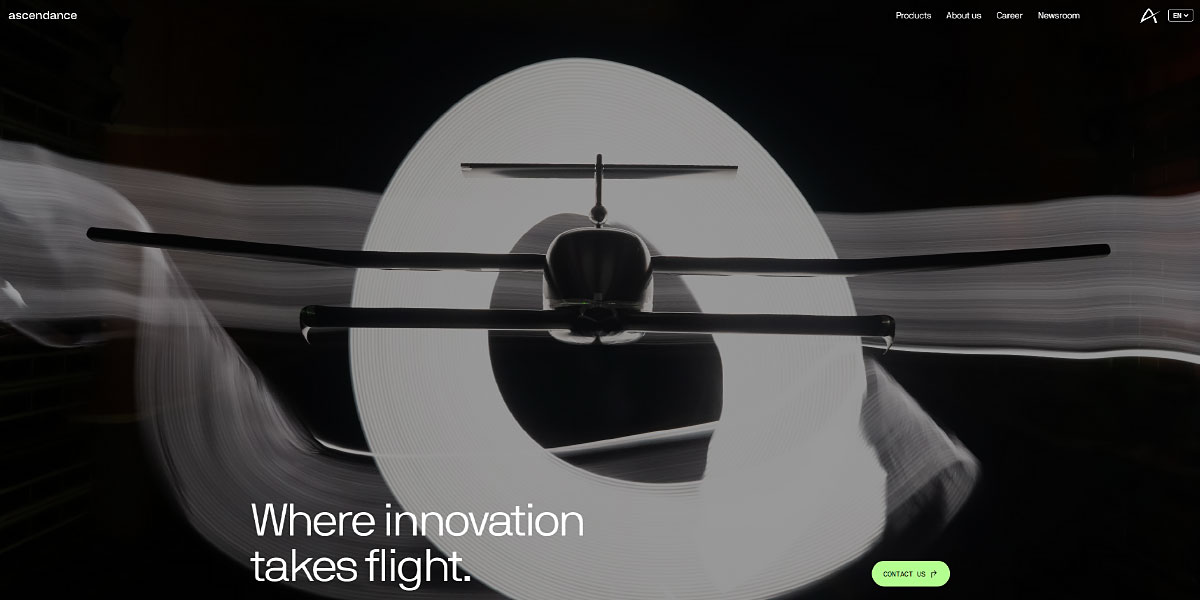
Ascendance Flight Technologies is a French aerospace startup founded in 2018 in Toulouse. It develops the ATEA Hybrid Electric VTOL using the STERNA Hybrid Pack, offering up to 400 km range, 200 kmh cruise speed, and up to 80 percent lower CO₂ for sustainable regional air mobility.
About Ascendance Flight Technologies Manufacturing Company
Ascendance Flight Technologies and Sustainable Regional Air Mobility
Ascendance Flight Technologies enters the aviation stage with a clear objective. Cut carbon, extend range, and keep aircraft practical for regional routes. Founded in 2018 in Toulouse, France, the company builds on Airbus E-Fan experience and pivots toward hybrid electric propulsion aircraft that answer real-world limits. And that origin story matters. Four former Airbus engineers stepped forward after the E-Fan 2.0 cancellation and decided to fix what battery-only concepts struggled to solve.
Today, Ascendance Flight Technologies operates at the center of sustainable regional air mobility in Europe. According to industry projections, regional aviation accounts for roughly 40 percent of short-haul emissions across the EU. Hybrid systems promise major gains. The company claims up to 80 percent CO₂ reduction compared with conventional rotorcraft using Jet A1 alone.
STERNA Hybrid Pack and Hybrid Electric Propulsion Aircraft Architecture
The technical core sits inside the proprietary STERNA Hybrid Pack. It pairs high-power batteries for vertical phases with a combustion engine optimized for cruise. And that dual-energy layout changes the math. Vertical takeoff and climb demand peak power, while cruise favors endurance and fuel flexibility.
STERNA runs on Jet A1, Sustainable Aviation Fuel, and prepares for hydrogen ready propulsion system upgrades. Turnaround times target around 10 minutes, which suits high-frequency regional hops. Research shows hybrid systems can extend mission range by 2 to 3 times compared with pure battery eVTOL platforms of similar weight.
- Up to 80 percent CO₂ reduction
- 10 minute turnaround capability
- Fuel flexibility including SAF and future hydrogen
ATEA Hybrid Electric VTOL and Fan in Wing VTOL Design
The flagship ATEA Hybrid Electric VTOL carries one pilot plus four passengers. And its configuration stands out. A fan in wing VTOL design integrates eight lift rotors embedded across four wings for vertical operations, with forward propulsion for cruise efficiency. That architecture balances lift redundancy with aerodynamic cruise performance.
ATEA targets a cruise speed of 200 kmh, roughly 124 mph. Standard range reaches 400 km, about 248 miles, with four passengers. With two passengers, range stretches to 900 km, close to 559 miles. Maximum takeoff weight sits near 2000 kg, around 4,409 pounds, giving it serious payload flexibility.
Performance Data, Payload Flexibility, and Multi Mission Capability
Performance numbers give context. Maximum flight time approaches 2 hours under typical mission profiles. And that endurance supports emergency medical VTOL aircraft roles, regional passenger transport, cargo logistics, and surveillance operations. Compared with many pure electric concepts limited to under 150 km range, ATEA delivers a wider operational envelope.
According to comparative analysis within advanced air mobility Europe programs, hybrid VTOL aircraft France projects often prioritize practical infrastructure compatibility. ATEA aligns with existing heliport footprints and regional airports. Operators gain mission flexibility without heavy ground upgrades.
- 400 km standard range with full load
- 900 km extended range with two passengers
- 200 kmh cruise speed for regional routes
EASA Certification Program and Safran ENGINeUS Electric Motors
Certification anchors long-term viability. Ascendance advances through an EASA certification program, focusing first on European validation before global expansion. As of February 2026, the full-scale prototype remains in assembly, with composite skins delivered and STERNA ground testing underway on iron-bird rigs.
The integration of EASA certified Safran ENGINeUS electric motors strengthens credibility. Safran brings decades of propulsion expertise, and Dassault Systèmes supports digital engineering workflows. First demonstrator flight targets early 2026, with serial production planned toward the late 2020s following certification milestones.
Toulouse Aerospace Startup with Global Partnerships
Ascendance Flight Technologies thrives in Toulouse, one of Europe’s strongest aerospace hubs. And location counts. Proximity to Airbus suppliers, research centers, and skilled engineers accelerates development cycles. The company has secured letters of intent for hundreds of ATEA units from operators across the US, Asia, and Europe.
Recent MoUs in Malaysia support production and integration in Southeast Asia. That regional expansion pairs with scalable hybrid solutions applicable beyond crewed aircraft, potentially extending to UAV platforms. Funding rounds and industrial partnerships position the company for steady industrial ramp-up.
Decarbonized Aviation Solutions and Future Hydrogen Pathways
Decarbonized aviation solutions define Ascendance’s long view. Hybrid propulsion bridges today’s energy density limits while preparing for hydrogen adoption. And that transition strategy appears pragmatic. Rather than waiting for battery breakthroughs, the company builds around available fuels and incremental upgrades.
Low noise vertical take off aircraft operations also improve community acceptance. Compared with traditional helicopters that can exceed 85 decibels at close range, hybrid systems target lower acoustic signatures. For regional mobility networks, quieter profiles and reduced emissions support broader public approval.
Ascendance Flight Technologies positions itself at a crossroads between conventional rotorcraft and zero emission ambition. Through the ATEA Hybrid Electric VTOL and the STERNA Hybrid Pack, it delivers measurable performance gains, extended range, and fuel adaptability. In a sector searching for balance between climate targets and operational reality, Ascendance charts a methodical, engineering-led path forward.