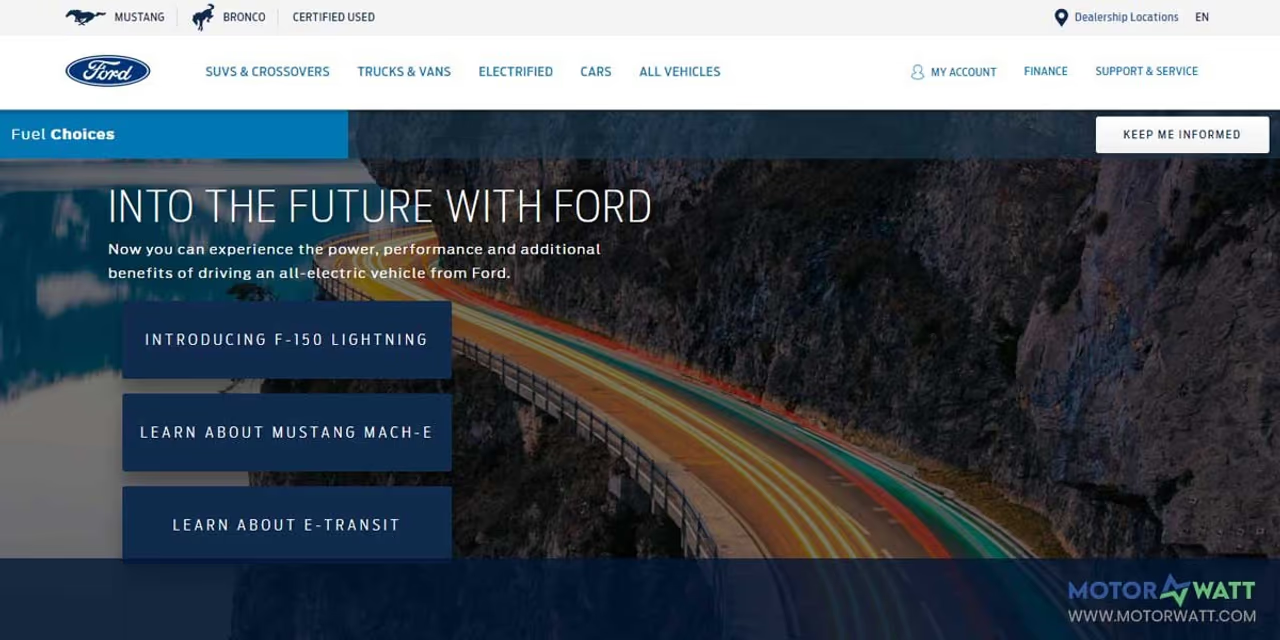

FORD Company Overview
FORD is a USA-based manufacturer of electric cars and SUVs, giving buyers a familiar automotive name with a growing electric focus. Founded in 1903, the company has moved from gasoline vehicles into battery-powered transport while retaining a broad vehicle portfolio. Ford’s electric range includes cars, SUVs, and trucks, supported by features such as regenerative braking, smart charging, driver assistance, and connected infotainment. Charging partnerships aim to help owners access public charging during longer journeys. Buyers choosing Ford gain the reach of an established automaker, while the company’s ongoing transition means its electric lineup and support network remain central to its future plans.
Manufacturer Description
FORD brings established automotive experience to electric vehicles
FORD suits drivers seeking electric cars from a long-established automotive company. Founded in 1903, Ford carries extensive manufacturing experience into an expanding electric portfolio. Its main appeal combines familiar brand recognition with electric cars, SUVs, and trucks. Buyers can therefore consider one producer across several vehicle types. That breadth matters for households with different transport needs.
Ford’s electric direction also includes sustainability goals and carbon-neutral ambitions. Renewable energy forms part of its production plans. Those commitments may appeal to shoppers who connect vehicle choice with wider environmental priorities. Buyers should still assess each model separately, since vehicle suitability varies by body style and equipment.
Electric technology aims to simplify daily driving
Ford’s electric vehicles include regenerative braking and smart charging features. Regenerative braking can return energy during deceleration, supporting efficient use of stored power. Smart charging can help owners manage charging around their routines. Together, those tools give electric driving a more structured daily rhythm.
Ford also highlights battery development as part of its electric work. Battery capability affects usable travel and charging planning, though exact results depend on each vehicle. Connected infotainment systems support access to vehicle functions and information. Driver-assistance technology adds support during ordinary journeys. Such equipment can reduce task load, while drivers remain responsible for attention and control.
Choice across cars, SUVs, trucks, and charging access
Ford’s stated electric range spans compact cars, SUVs, and electric trucks. That variety gives buyers more ways to match an EV with family duties, cargo needs, or work routines. A truck-focused buyer may value a different format than a city commuter. Model-level research remains essential before choosing.
- Established company with roots reaching back to 1903
- Electric cars, SUVs, and trucks within one brand family
- Regenerative braking and smart charging features
- Charging access supported through industry alliances
Charging partnerships can help owners find public charging locations during longer trips. Coverage and convenience depend on location, network access, and vehicle compatibility. Buyers who prefer simple local driving may find an electric Ford straightforward. Frequent long-distance travellers should study charging routes before purchase.
Which customers should keep FORD among their options?
Keep FORD on the shortlist if you want electric choice from an established automotive name. The range suits buyers comparing cars, SUVs, and trucks within one brand. Sustainability aims, charging partnerships, and practical electric features strengthen the case.
Another producer may suit shoppers seeking a narrower electric specialist or a single highly focused vehicle type. Ford’s broad approach rewards buyers who value choice and brand familiarity. Careful model comparisons remain the sensible final step.