BYD Racco 2026: Price, Range, and Technical Specs
BYD Racco is a 2026 electric kei car developed for Japan. It features a 20 kWh LFP Blade Battery, 180 km WLTC range, and 100 kW DC fast charging. Powered by a 20 kW motor with front-wheel drive, it seats four passengers and reaches 105 km/h top speed. Priced from $16,340, it targets urban commuters seeking compact, affordable electric mobility.


| Starting Price | $16,340 |
| Model Year | 2026 |
| Country of Manufacturing | China |
| Battery Size | 20 kWh |
| Official Range | 112 mi |
| Power | 27 hp |
* Minimum price set for the base trim by the manufacturerr, excluding taxes and additional options

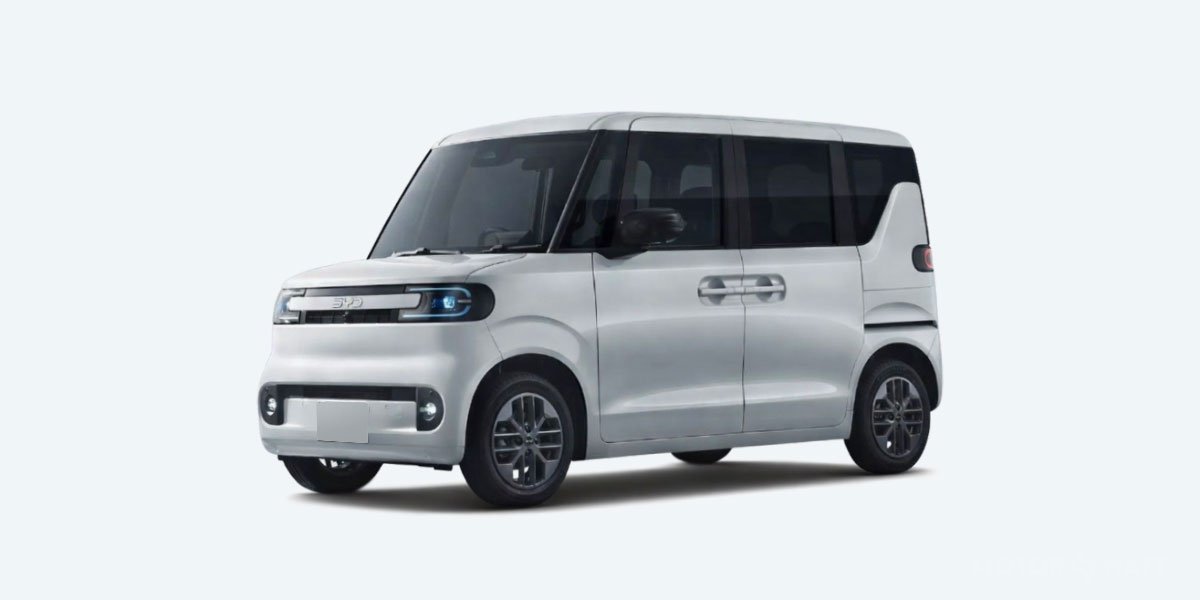
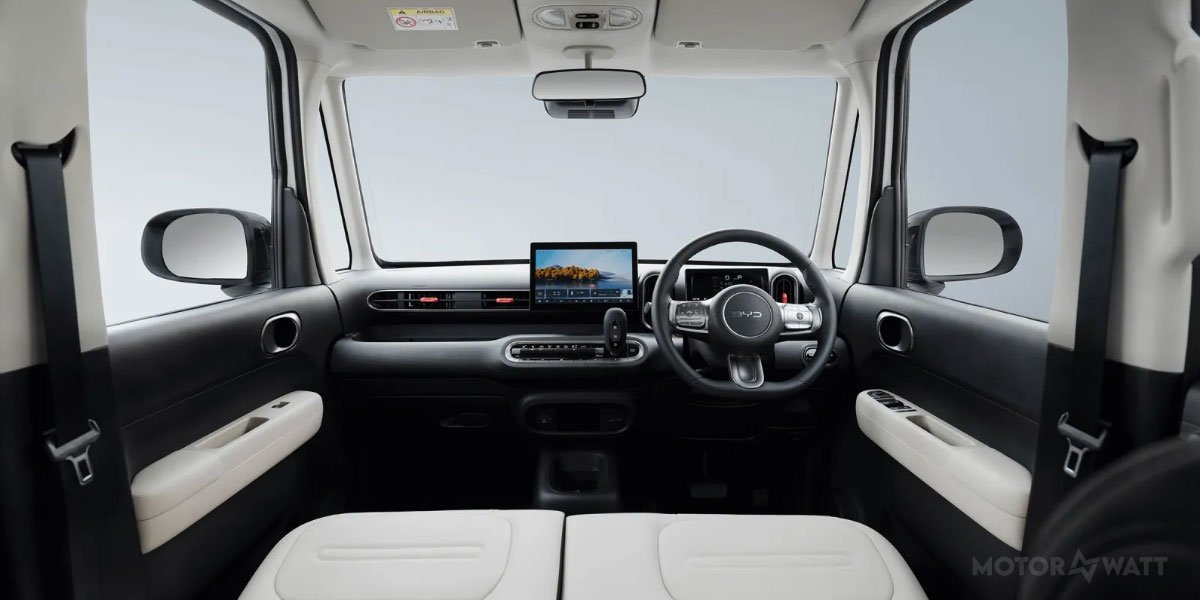
Exterior and Interior photos of BYD Racco 2026


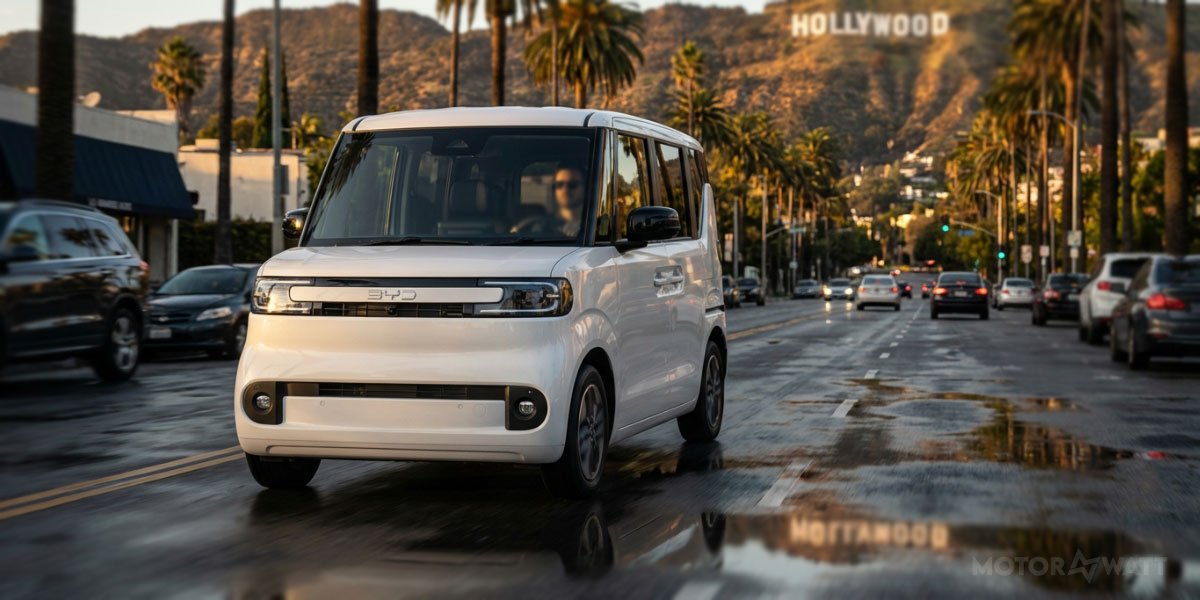
BYD Racco 2026 Review: Early Impressions & Tech Analysis
BYD Racco 2026 Introduction:
BYD Racco arrives as a purpose-built electric kei car engineered for Japan’s dense city grid. Manufactured in China and tailored for strict kei regulations, the 2026 model signals a sharp pivot toward hyper-localized electric mobility. Officially unveiled at the 2025 Japan Mobility Show, it targets urban commuters who crave efficiency over extravagance. With a 20 kWh Blade Battery, a 180 km WLTC range, and 100 kW DC fast charging, it packs credible technology into a footprint just 3,395 mm long. Pricing starts at $16,340 USD (€14,102), placing it squarely in the affordable Japanese micro EV segment. Think of it as a four-seat electric minibus sized for Tokyo alleys yet equipped like a modern hatchback.
- Unveiled at the 2025 Japan Mobility Show as BYD’s first kei-focused EV.
- Scheduled for summer 2026 launch in Japan.
- Base price from $16,340 USD (€14,102) targeting mass urban adoption.
- Features dual sliding doors and 100 kW DC charging capability.
- Designed to rival Nissan Sakura and Mitsubishi eK X EV.
What is the Price of BYD Racco?
The BYD Racco price starts at $16,340 USD (€14,102). That positions it among the most accessible electric kei cars in Japan. It undercuts several domestic rivals while offering faster DC charging and premium cabin tech.
| Trim Level | PRICE | KEY FEATURES |
|---|---|---|
|
Base (20 kWh)
|
Front-wheel drive. 20 kW motor delivering 27 hp and 110 Nm torque. WLTC range 180 km or 112 miles. DC fast charging up to 100 kW. Dual sliding rear doors and 12-inch touchscreen included.
|
|
|
Premium (ADAS + Heated Seats)
|
Adds Level 2 driver assistance, heated front seats, enhanced safety tech, and refined interior trim. Maintains same 20 kWh battery and 100 kW charging capability.
|
Both trims share identical battery and performance hardware. The Premium package focuses on comfort and advanced driver assistance. For buyers seeking value, the base model already feels well equipped. For commuters craving extra safety tech, the Premium trim makes a strong case at under $19,000.
Engine, Battery, and Performance Specs:
Battery & Charging Specifications
The 20 kWh lithium iron phosphate Blade Battery anchors the platform. WLTC range stands at 180 km, equal to 112 miles. In city use, regenerative braking extends efficiency. DC fast charging supports up to 100 kW, allowing a 10 to 80 percent recharge in 15 to 20 minutes. AC charging suits overnight home setups. Heat pump climate control preserves driving range during colder months.
- Battery capacity: 20 kWh LFP Blade Battery
- WLTC range: 180 km / 112 miles
- DC charging: 10–80% in 15–20 minutes
- Heat pump efficiency system included
Electric Motor Specifications
A single front-mounted motor produces 20 kW, or 27 horsepower. Torque reaches 110 Nm, about 81 lb-ft. Power delivery suits urban stoplights and tight intersections. Front-wheel drive maximizes traction in wet city streets. Curb weight sits at 1,080 kg, roughly 2,381 pounds. Low center of gravity enhances stability.
- Motor output: 20 kW / 27 hp
- Torque: 110 Nm / 81 lb-ft
- Drive type: Front-wheel drive
- Curb weight: 1,080 kg / 2,381 lbs
Performance Specifications
Acceleration focuses on city agility. Zero to 50 km/h takes 6.0 seconds. Top speed reaches 105 km/h, about 65 mph. Suspension tuning favors comfort over corner carving. Tight turning radius aids parking in narrow Tokyo lanes.
- 0–50 km/h: 6.0 seconds
- Top speed: 105 km/h / 65 mph
- Wheelbase: 2,300 mm / 90.5 inches
Urban drivers gain efficiency, maneuverability, and predictable braking response. And that matters in crowded districts. For daily commuting, specs align neatly with real-world needs.
Exterior and Interior Features
Exterior Design
The exterior follows a tall, boxy silhouette maximizing kei dimensions. Length measures 3,395 mm, about 133.6 inches. Width spans 1,475 mm or 58.1 inches. Height reaches 1,800 mm, roughly 70.8 inches. Dual sliding rear doors improve access in tight parking bays. Fifteen-inch alloy wheels sit at each corner. LED light signatures create a distinctive face.
Interior & Technology
Inside, the flat floor layout enhances cabin movement. A 12-inch touchscreen dominates the dash. An 8-inch digital cluster presents speed and battery data. Synthetic leather bench seating fits four passengers. Heated seats appear in higher trims. USB-C ports support modern devices. Cargo capacity reaches 150 liters, expandable via folding rear seats.
Overall, the cabin feels airy despite compact proportions. Materials lean practical yet modern. For urban families, functionality takes center stage.
Pros and Cons:
Pros
- Competitive starting price under $17,000
- 100 kW DC fast charging capability
- Dual sliding rear doors for tight spaces
- Efficient heat pump system
- Compact dimensions ideal for Japanese cities
Cons
- Modest 27 hp output limits highway use
- Brand recognition challenges in Japan
- 180 km range focuses strictly on urban travel
Conclusion:
The BYD Racco delivers city-focused electric mobility in a compact four-seat package. Priced from $16,340 (€14,102), it offers 100 kW charging and a 180 km WLTC range. Dual sliding doors and modern digital displays elevate daily commuting. For urban Japan, it presents a pragmatic and technology-rich alternative within the electric kei car category.
Watch the Video Overview

Full specifications
Model Specs
| Specification | Actual Data |
|---|---|
|
Model Name
|
BYD Racco
|
|
Model Year
|
2026
|
|
Manufacturer
|
BYD Auto
|
|
Country of Origin
|
China
|
|
Vehicle Class
|
Electric Kei Car / Micro-Van
|
|
Seating Capacity
|
4 passengers
|
Performance
| Specification | Actual Data |
|---|---|
|
Powertrain
|
Full-electric BEV
|
|
Drive Type
|
Front-Wheel Drive FWD
|
|
Motor Output
|
20 kW 27 hp
|
|
Torque
|
110 Nm 81 lb-ft
|
|
Top Speed
|
105 km/h 65 mph
|
|
Acceleration 0–50 km/h
|
6.0 seconds 0–31 mph
|
Battery and Charging
| Specification | Actual Data |
|---|---|
|
Battery Capacity
|
20 kWh LFP Blade Battery
|
|
Fast Charging Rate
|
Up to 100 kW DC
|
|
DC Charging Time 10–80%
|
15–20 minutes
|
Estimated Range Data
| Specification | Actual Data |
|---|---|
|
WLTC Range
|
180 km 112 miles
|
|
Urban Range Focus
|
Optimized for city commuting cycles
|
Body Specifications
| Specification | Actual Data |
|---|---|
|
Length
|
3395 mm 133.6 in
|
|
Width
|
1475 mm 58.1 in
|
|
Height
|
1800 mm 70.8 in
|
|
Wheelbase
|
2300 mm 90.5 in
|
|
Curb Weight
|
1080 kg 2381 lbs
|
Exterior Design Features
| Specification | Actual Data |
|---|---|
|
Door Configuration
|
Dual sliding rear doors
|
|
Wheel Size
|
15 inch alloy wheels 381 mm
|
Interior Design and Materials
| Specification | Actual Data |
|---|---|
|
Seat Material
|
Synthetic leather bench seating
|
|
Cargo Capacity
|
150 liters 5.3 cubic feet expandable
|
Cabin Technical Features
| Specification | Actual Data |
|---|---|
|
Central Display
|
12 inch touchscreen 30.5 cm
|
|
Digital Cluster
|
8 inch display 20.3 cm
|
|
Driver Assistance
|
Level 2 ADAS on Premium trim
|
F.A.Q. about BYD Racco 2026
What is the price for buyers in the USA and Europe?
BYD Racco lists at $16,340 USD (€14,102) for the base trim, while the Premium trim runs $18,900 USD (€16,320) based on the same exchange rate used earlier.
- Base trim: $16,340 (€14,102)
- Premium trim: $18,900 (€16,320)
- Pricing may vary by taxes and import rules
Is it available for purchase in the USA or Europe?
Official sales target Japan for summer 2026, so availability in the USA or Europe depends on future import plans, compliance testing, and local dealership rollout.
- Japan launch timing: summer 2026
- USA and EU sales require separate homologation
- Grey market imports may face registration hurdles
What is the usable battery capacity and chemistry?
The Racco uses a 20 kWh lithium iron phosphate Blade Battery, tuned for durability and steady performance in daily urban charging cycles.
- Battery capacity: 20 kWh
- Chemistry: LFP
- Design focus: frequent short trips
What range should drivers expect in real use?
BYD Racco rates at 180 km WLTC, about 112 miles, and real-world range shifts with speed, temperature, and climate control use.
- WLTC rating: 180 km or 112 miles
- City driving often favors higher efficiency
- Cold weather and heat reduce range
How long does charging take on fast chargers and home charging?
DC charging targets 10 to 80 percent in about 15 to 20 minutes at up to 100 kW, while home charging works best as an overnight top-up routine.
- DC 10–80 percent: 15–20 minutes
- Peak DC input: up to 100 kW
- Home charging: ideal for nightly refills
Can it use public charging stations in the USA and Europe?
Public charging works only when the charge port standard and payment systems match local networks, so compatibility depends on the regional version and connector setup.
- Japan networks use their own common standards
- Europe often favors CCS
- USA compatibility varies by network and connector
What maintenance should owners expect from a micro EV?
Maintenance focuses on tires, brakes, suspension checks, cabin filters, and coolant for the thermal system, since the electric powertrain reduces routine service compared with gasoline cars.
- Brake service often runs less frequent due to regen
- Tire wear depends on driving style and alignment
- Software updates keep infotainment current
Is it suitable for cold climates and winter commuting?
Cold weather reduces range, yet the heat pump helps limit the hit by using less energy than resistance heating in stop-and-go commuting.
- Heat pump supports winter efficiency
- Short trips benefit from preconditioning
- Higher speeds amplify winter energy use
How practical is cabin space for four passengers and cargo?
Packaging favors vertical space, with a flat floor and bench seating for four, plus 150 liters of cargo room that expands when the rear bench folds.
- Seats: 4
- Cargo: 150 liters, expandable
- Sliding doors help entry in tight parking
What safety and driver assistance features should shoppers look for?
Shoppers who want extra help in traffic should focus on the Premium trim, since it adds Level 2 driver assistance along with comfort upgrades like heated seats.
- Premium trim adds Level 2 ADAS
- Digital displays support driver awareness
- Urban tuning favors smooth braking response