Volkswagen ID.4 2025: Price, Range, and Technical Specs
The 2025 Volkswagen ID.4 is a compact electric SUV built in Germany with an 82-kWh battery, up to 468 km (≈ 291 miles) of range, 282 hp (≈ 210 kW), and 0–100 km/h in 7.3 s. Starting at $45,095 (≈ €38,590 / £33,540), it pairs a quiet ride with family-sized space and straightforward charging.


| Starting Price | $45,095 |
| Model Year | 2025 |
| Country of Manufacturing | Germany |
| Battery Size | 82 kWh |
| Official Range | 291 mi |
| Power | 282 hp |
* Minimum price set for the base trim by the manufacturerr, excluding taxes and additional options

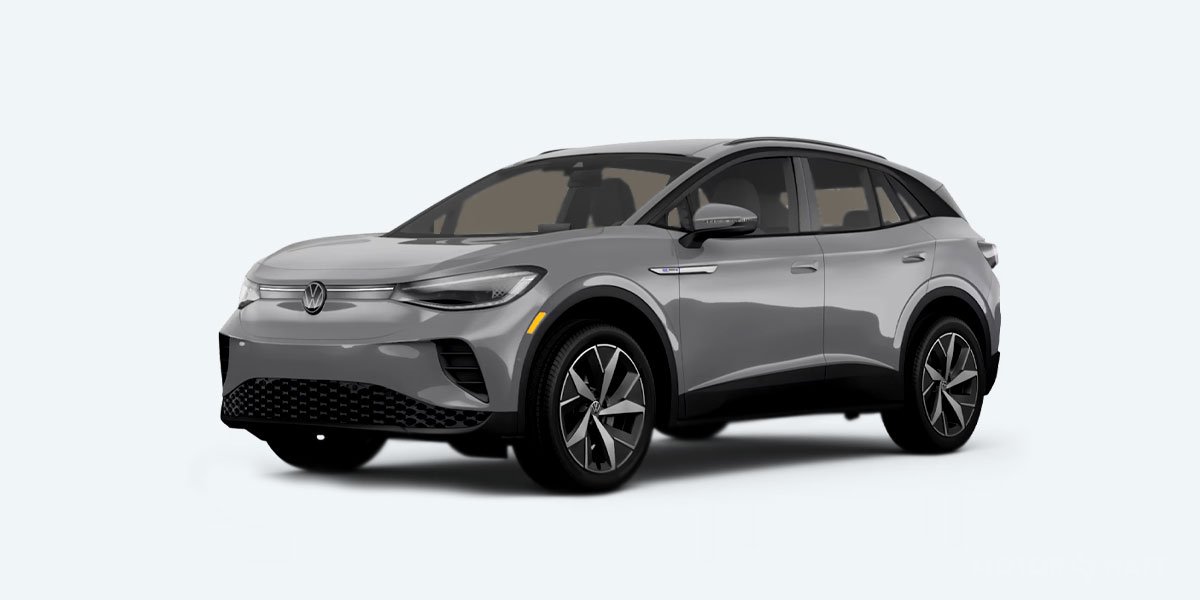
Exterior and Interior photos of Volkswagen ID.4 2025


Volkswagen ID.4 2025 Review: Early Impressions & Tech Analysis
Volkswagen ID.4: 2025 Compact EV SUV With Everyday Range and Room
The Volkswagen ID.4 returns for 2025 targeted squarely at drivers who want a calm, quiet commute and a cabin that swallows family gear without drama. Think clean lines outside, big-car space inside, and updates where shoppers care—powertrain response, software polish, and charging practicality. Right out of the gate, the sticker reads $45,095 (≈ €38,590 / £33,540), which feels keen once you factor federal incentives and low running costs. Built in Germany on the proven MEB architecture, it aims for confident range, predictable dynamics, and the kind of user-friendly ownership that builds brand loyalty.
- Manufactured in Germany; model year 2025 delivers refined calibration and interface upgrades for daily drivability.
- Positioned as a value-minded, family-ready electric SUV with a starting price of $45,095 (≈ €38,590 / £33,540).
- MEB platform fundamentals provide balanced weight distribution and tidy packaging for passengers and cargo.
- Targets shoppers comparing a practical EV crossover and a smooth ride over overt sportiness.
Battery, Range and Performance:
Battery, Charging and Range
An 82-kWh pack underpins the long-legged character, rated at 468 km (about 291 miles) on the international cycle, with efficient suburban numbers when temperatures cooperate. DC fast charging peaks at 175 kW, good for a 10–80% window in roughly 30 minutes, while the 11-kW onboard charger handles overnight replenishment on Level 2. Owners can expect smooth thermal management and stable highway consumption when driven at a steady 70 mph (113 km/h). Home charging convenience pairs neatly with predictable range planning for commuters.
- Battery capacity: 82 kWh; home charging: 11 kW AC
- Estimated driving range: 468 km (≈ 291 miles)
- Fast charging: up to 175 kW; ~30 min 10–80%
- Energy-savvy thermal conditioning supports consistent results
Performance Specifications
Rear-drive calibration delivers 282 hp (≈ 210 kW) to the back axle, with a 0–100 km/h run of 7.3 seconds and a governed 180 km/h (112 mph) top speed. Steering stays light for parking ease, suspension tuning favors calm over cornering theatrics, and road noise is well hushed on sane wheel sizes. The payoff: relaxed highway tracking and an unflustered ride over patchy pavement. Drivers trading autocross antics for family serenity will appreciate the balance.
- Power: 282 hp (≈ 210 kW); drive: RWD
- 0–100 km/h: 7.3 s; top speed: 180 km/h (≈ 112 mph)
- Calibration favors smooth throttle mapping and consistent braking feel
- Light steering effort aids urban maneuverability
Trim strategy spans efficiency-first RWD to punchier AWD variants; shoppers prioritizing outright thrust can step up, while value hunters will gravitate to the well-equipped Pro specification.
Exterior and Interior Features
Exterior
A minimalist profile keeps aero tidy and wind hush low. Clean surfacing, LED lighting signatures, and tidy overhangs yield a friendly footprint for garages and tight city streets. Proportions deliver crossover height without feeling bulky, and the tight turning circle helps with parking decks and school runs. Wheel designs from sensible to flashy exist, though ride quality stays happiest below the largest diameters.
Interior
Cabin packaging shines: generous front legroom, adult-friendly rear quarters, and a cargo bay rated at 543 liters (≈ 19.2 cu-ft), expandable for flat-pack missions. The 12.9-inch infotainment screen brings faster menus and backlit sliders, while wireless phone mirroring streamlines daily use. A compact driver display conveys essentials cleanly; voice control handles quick tasks. Materials skew durable; assembly feels honest even if a few plastics read utilitarian.
Pros and Cons:
Pros
- Competitive range with calm, quiet ride quality for long commutes
- Spacious, cargo-friendly interior with smart small-item storage
- Straightforward charging profile: 175-kW DC; convenient Level-2 overnight
- Comprehensive driver-assist features and strong safety ratings
- Value-driven positioning enhances overall ownership economics
Cons
- Touch sliders and steering-wheel haptics require acclimation
- Regen tuning stops short of true one-pedal operation
- Handling favors composure over playfulness
- Fast-charge rate trails the quickest rivals
Prices depending on the trim and options:
| Volkswagen ID.4 Pro (RWD) | $45,095 (≈ €38,590 / £33,540) |
| Volkswagen ID.4 AWD Pro | $48,995 (≈ €41,930 / £36,440) |
| Volkswagen ID.4 Pro S | $50,195 (≈ €42,960 / £37,340) |
| Volkswagen ID.4 AWD Pro S | $54,095 (≈ €46,290 / £40,240) |
| Volkswagen ID.4 AWD Pro S Plus | $57,295 (≈ €49,030 / £42,620) |
Verdict: Calm, Capable, and Family-Focused
Volkswagen ID.4 aims squarely at daily life: measured power, easy range planning, and real space for people plus cargo. Pricing lands well, charging is predictable, and the cabin tech finally feels intuitive enough for busy households. Shoppers who prize a serene drive, low running costs, and practical packaging will find a willing long-term companion here.
Watch the Video Overview


F.A.Q. about Volkswagen ID.4 2025
What is the usable battery capacity?
An 82-kWh pack supports daily commuting and weekend highway runs. Level-2 at 11 kW handles a full overnight recharge for predictable routines.
How far can it drive on one charge?
The Volkswagen ID.4 posts up to 468 km (≈ 291 miles) per charge under typical conditions. Range varies with temperature, speed, terrain, and wheel size.
What is the top speed?
Top speed is 180 km/h (≈ 112 mph), aligned with efficiency and tire ratings. The limiter supports quiet cruising and preserves range on long trips.
How quick is the acceleration?
Expect 0–100 km/h in 7.3 seconds, with smooth launches and linear pull. The calibration favors predictable response over raw theatrics.
How much power does it make?
Output is rated at 282 hp (≈ 210 kW), driving the rear axle for balanced traction. The tune emphasizes quiet torque delivery in city traffic.
How long does charging take?
Fast charging at up to 175 kW brings the battery from 10–80% in about 30 minutes. A home Level-2 setup at 11 kW typically refills overnight.
How roomy is the cargo area?
Cargo volume measures 543 liters (≈ 19.2 cu-ft) with the rear seat up. The space expands easily when you fold the backrests for larger hauls.
What is the price?
The Volkswagen ID.4 starts at $45,095 (≈ €38,590 / £33,540) before incentives. Trim walk rises to $57,295 (≈ €49,030 / £42,620) for the AWD Pro S Plus.