Alef Aeronautics Model A: Price, Range, and Technical Specs
Alef Aeronautics Model A is a 2025 American electric flying car designed for road and vertical flight. It features an 85 kWh battery, 322 km driving range, and 177 km flight range. Top aerial speed reaches 177 km/h while road speed is limited to 40 km/h. With eight electric motors and FAA certification, it enables driveway takeoff without a runway, targeting luxury urban commuters seeking personal air mobility.

| Starting Price | $299,999 |
| Model Year | 2025 |
| Country of Manufacturing | USA |
| Flying Range | 110 mi |
| Battery Size | 85 kWh |
| Road Range | 200 mi |
* Minimum price set for the base trim by the manufacturerr, excluding taxes and additional options

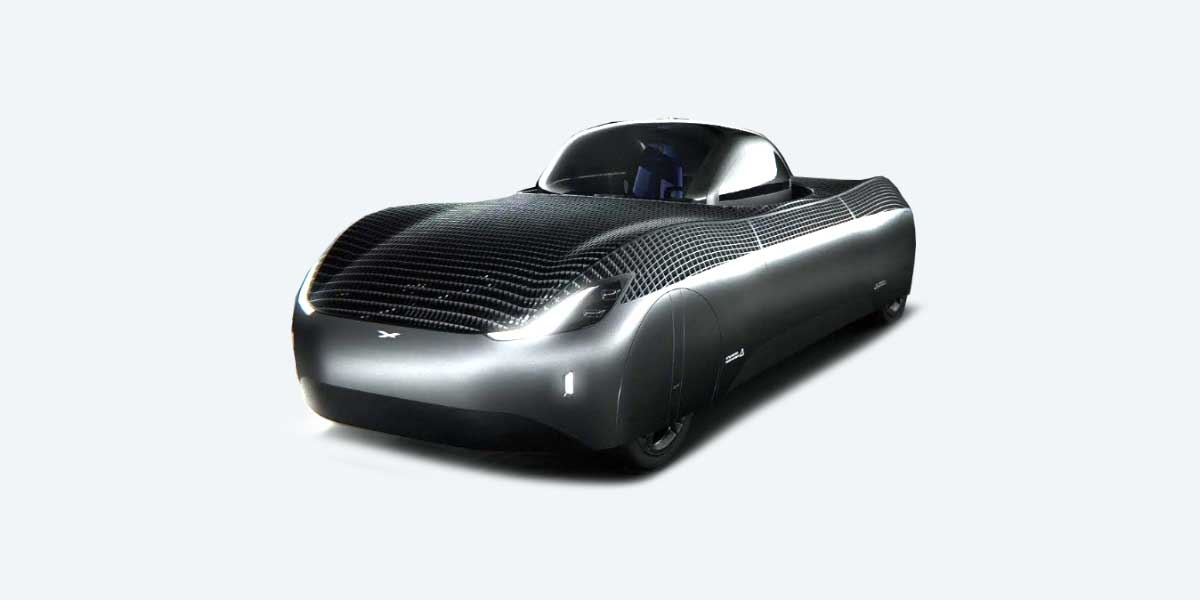
Exterior and Interior photos of Alef Aeronautics Model A


Alef Aeronautics Model A Review: Early Impressions & Tech Analysis
Alef Aeronautics Model A Introduction:
Alef Aeronautics Model A arrives as a fully electric personal eVTOL vehicle built in the United States for the 2025 model year. It targets early adopters who crave urban air mobility without leaving the driveway. Late 2025 marks low-volume production, followed by a 2026 rollout. An 85 kWh battery supports both road and flight modes. Driving range reaches 322 km, about 200 miles. Flight range covers 177 km, roughly 110 miles. Top aerial speed climbs to 177 km/h, about 110 mph. On the ground, it qualifies as a Low Speed Vehicle capped at 40 km/h, 25 mph. Base price stands at $299,999 USD (€252,609). It sits squarely in the luxury innovation bracket, aimed at buyers who value time over toll booths.
- Manufacturer: Alef Aeronautics, USA-based aviation startup focused on Advanced Air Mobility.
- Launch: Late 2025 pilot production with broader 2026 market expansion.
- Innovation: Vertical takeoff from standard parking spaces using an enclosed rotor mesh body.
- Starting price: $299,999 USD (€252,609) targeting luxury urban commuters.
- Positioning: Only street-legal flying car with driveway takeoff capability.
What is the Price of Alef Aeronautics Model A in 2026?
The Alef Aeronautics Model A price starts at $299,999 USD (€252,609). That figure places it above premium EV sedans and into rarefied aerospace territory. Buyers secure both a road vehicle and a vertical takeoff aircraft in one carbon-fiber package.
| Trim Level | PRICE | KEY FEATURES |
|---|---|---|
|
Model A Base
|
85 kWh battery. 322 km road range and 177 km flight range. Eight motor Distributed Electric Propulsion system. Vertical takeoff from driveway. 177 km/h flight speed. Carbon fiber mesh shell. Two seat gimbaled cockpit. 8 hour Level 2 charging with DC fast charge compatibility.
|
|
|
Model A Hydrogen
|
Hydrogen extended range concept. Projected higher aerial endurance. Targeted for future release. Focused on longer intercity air routes while retaining vertical takeoff capability.
|
Base configuration suits dense city hopping. Hydrogen variant targets extended regional travel. Both versions prioritize vertical ascent over runway dependence. Buyers invest in time savings and spatial freedom.
Engine, Battery, and Performance Specs:
Battery & Charging Specifications
An 85 kWh battery pack powers road and air operations. Driving range reaches 322 km, about 200 miles. Flight range stretches 177 km, around 110 miles. Level 2 AC charging requires roughly 8 hours. DC fast charging compatibility shortens downtime. Energy density supports vertical lift without bulky wing structures. Payload allowance stands at 91 kg, about 200 pounds. Curb weight measures 386 kg, roughly 851 pounds.
- Battery Capacity: 85 kWh
- Road Range: 322 km 200 miles
- Flight Range: 177 km 110 miles
- Charging: 8 hours Level 2 AC
- Payload: 91 kg 200 lb
Electric Motor Specifications
Distributed Electric Propulsion drives performance. Eight independent electric motors manage lift and thrust. Four in-wheel motors handle road movement. Electric output distributes evenly for redundancy. Motor architecture supports safe landing even during partial motor failure. Electric propulsion replaces combustion entirely.
- Motors: 8 total electric units
- Drive Type: Electric DEP system
- Road Configuration: Four in-wheel motors
- Energy Source: 100 percent electric
Performance Specifications
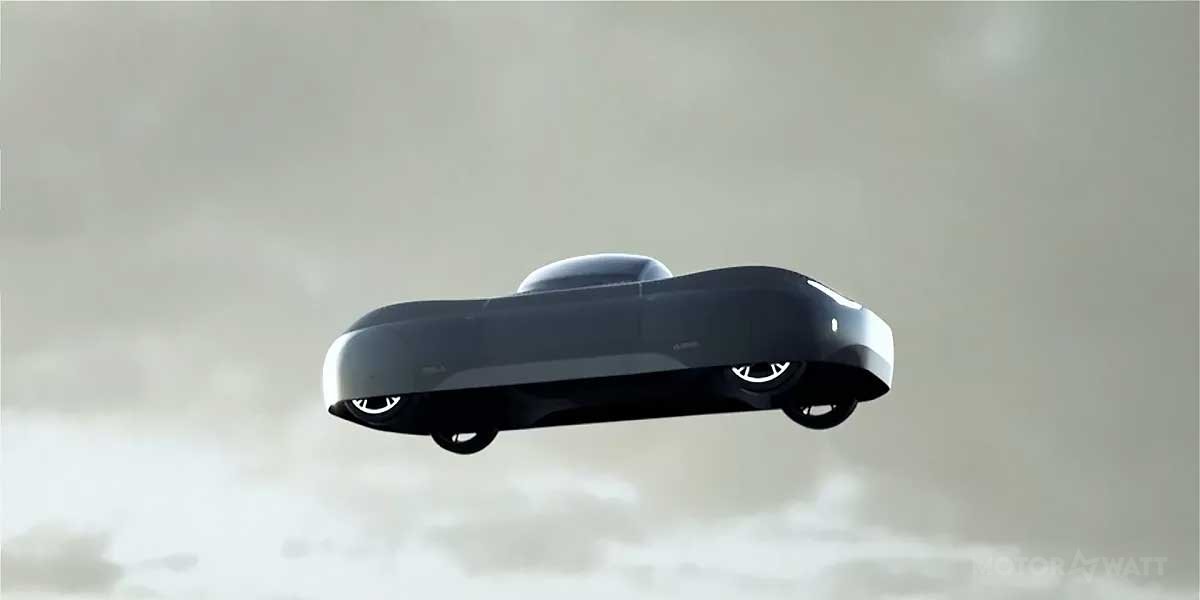
Flight speed peaks at 177 km/h, 110 mph. Road speed caps at 40 km/h, 25 mph. Vertical takeoff lifts directly from parking spots. Body rotates 90 degrees midair. Biplane configuration forms using the car sides as wings. Transition remains smooth through advanced flight control software.
- Top Flight Speed: 177 km/h 110 mph
- Road Speed Limit: 40 km/h 25 mph
- Takeoff: Vertical ascent
- Transformation: 90 degree body rotation
Urban commuters gain aerial bypass capability. Traffic gridlock turns irrelevant. Short hops convert into straight-line flights. And that changes daily mobility.
Exterior and Interior Features
Exterior Design
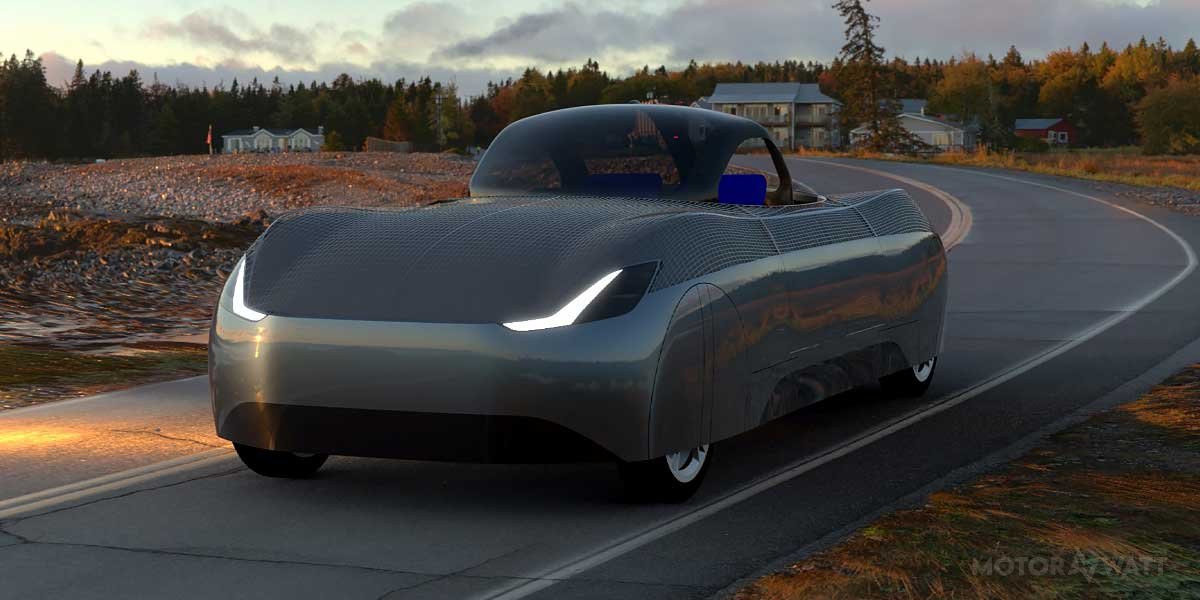
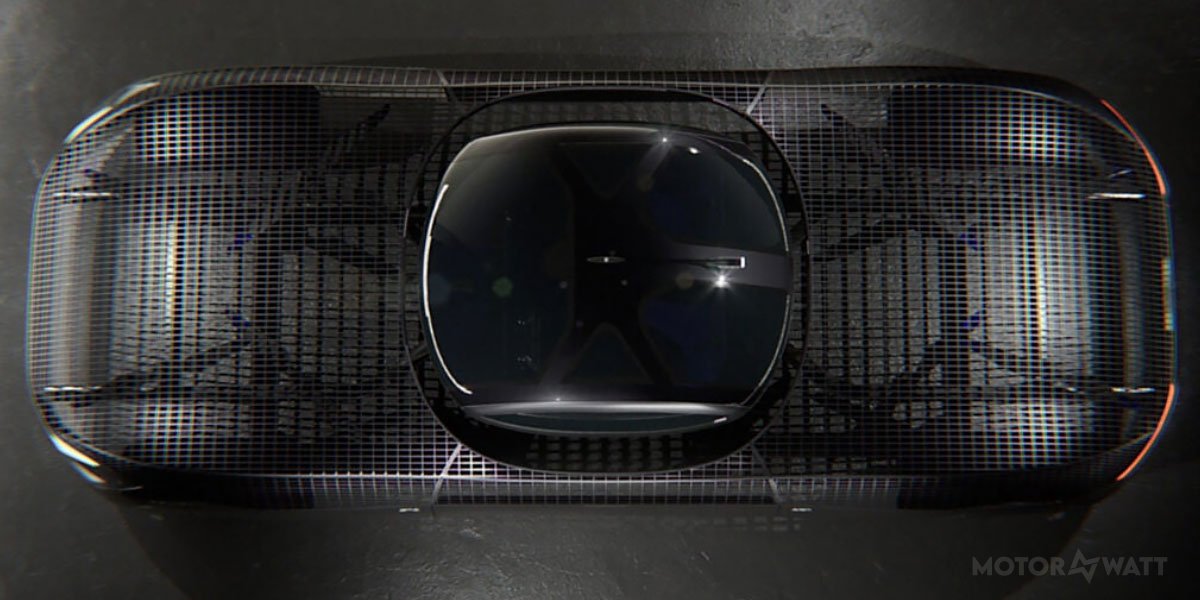
Exterior styling resembles a compact supercar silhouette. Carbon fiber mesh encloses internal rotors. No exposed propellers appear during road mode. LED matrix lighting wraps around front and rear. Those strips function as headlamps and navigation lights. Dimensions measure 5.2 m length, about 17 feet. Width reaches 2.1 m, roughly 6.9 feet. Height stands near 1.8 m, about 5.9 feet. Structure fits inside standard garages. And it still hides a full aircraft system within.
Interior & Technology
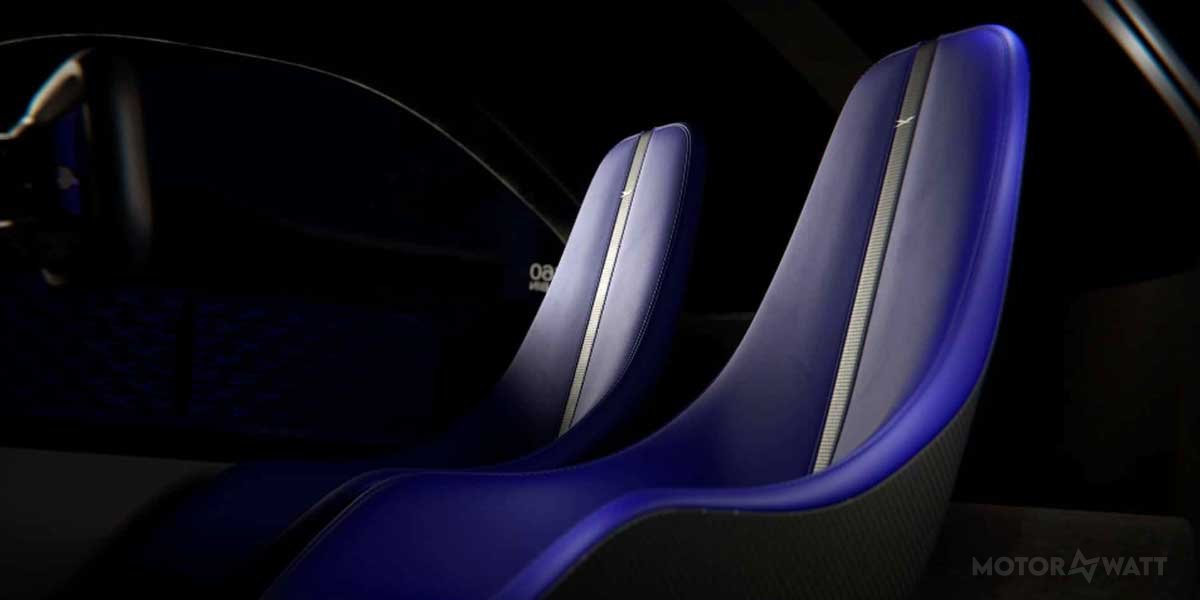
Cabin design centers on a spherical gimbaled cockpit. Occupants remain upright during body rotation. Two ergonomic seats use lightweight synthetic materials. Digital interface displays flight telemetry and automotive data. Satellite navigation integrates air traffic updates. Obstacle detection scans 360 degrees. Ballistic parachute adds final safety redundancy. Real time diagnostics monitor propulsion systems continuously.
Exterior efficiency supports vertical airflow. Interior stabilization maintains comfort. Together, they shape a new mobility category.
Pros and Cons:
Pros
- Vertical takeoff from driveway
- Street legal configuration
- 85 kWh electric powertrain
- FAA Special Airworthiness Certification
- Carbon fiber lightweight construction
Cons
- Limited 40 km/h road speed
- High purchase price
- Limited cargo capacity
Market position & Expert Data:
Advanced Air Mobility gains traction in 2025. According to Reuters, global eVTOL investment surpassed $7 billion in recent funding cycles. FAA certification places Alef in a narrow leadership bracket. Research shows urban congestion costs U.S. drivers over $1,000 annually in lost time, based on Harvard Business Review analysis of mobility inefficiencies.
McKinsey projects Advanced Air Mobility could reach a $1 trillion market by 2040, according to McKinsey. That forecast positions early certified entrants favorably. Alef stands alone as a road legal vertical takeoff vehicle. Competitors like Joby and Archer require vertiports. That difference matters in dense U.S. cities such as Los Angeles or Chicago.
Conclusion:
Alef Aeronautics Model A introduces a new chapter in electric mobility. It unites a 85 kWh battery platform with vertical takeoff capability. Road range reaches 322 km and flight range 177 km. At $299,999 (€252,609), buyers invest in time savings and direct aerial travel. For urban professionals seeking freedom from congestion, few vehicles offer comparable flexibility.
Watch the Video Overview


Full specifications
Model Specs
| Specification | Actual Data |
|---|---|
|
Model Name
|
Model A
|
|
Model Year
|
2025
|
|
Manufacturer
|
Alef Aeronautics
|
|
Country of Origin
|
United States
|
|
Vehicle Class
|
Personal electric Vertical Take off and Landing vehicle
|
|
Seating Capacity
|
2 passengers
|
Performance
| Specification | Actual Data |
|---|---|
|
Power Type
|
Fully Electric Distributed Electric Propulsion
|
|
Motor Configuration
|
8 electric motors total
|
|
Top Speed Flight
|
177 km/h (110 mph)
|
|
Top Speed Road
|
40 km/h (25 mph)
|
Battery and Charging
| Specification | Actual Data |
|---|---|
|
Battery Capacity
|
85 kWh (approx. 306 MJ)
|
|
Charging Time Level 2
|
Approx. 8 hours AC
|
|
DC Fast Charging
|
Compatible
|
Estimated Range Data
| Specification | Actual Data |
|---|---|
|
Road Range
|
322 km (200 miles)
|
|
Flight Range
|
177 km (110 miles)
|
Body Specifications
| Specification | Actual Data |
|---|---|
|
Length
|
5.2 m (17.1 ft)
|
|
Width
|
2.1 m (6.9 ft)
|
|
Height
|
1.8 m (5.9 ft)
|
|
Curb Weight
|
386 kg (851 lb)
|
|
Cargo Capacity
|
91 kg (200 lb)
|
Exterior Design Features
| Specification | Actual Data |
|---|---|
|
Body Structure
|
Carbon fiber mesh shell enclosing 8 internal rotors
|
|
Lighting System
|
LED matrix strips front and rear
|
Interior Design and Materials
| Specification | Actual Data |
|---|---|
|
Cabin Layout
|
Spherical gimbaled cockpit stabilization
|
|
Seating Material
|
Lightweight high grade synthetic upholstery
|
Cabin Technical Features
| Specification | Actual Data |
|---|---|
|
Infotainment Interface
|
Ultra minimalist digital display with flight telemetrics
|
|
Navigation
|
Satellite linked navigation with real time air traffic synchronization
|
|
Safety Systems
|
360 degree obstacle detection, ballistic parachute, motor redundancy
|
F.A.Q. about Alef Aeronautics Model A
What is the usable battery capacity and energy setup of this personal eVTOL vehicle?
Model A uses an 85 kWh battery pack to power both road driving and vertical flight. The pack supports Distributed Electric Propulsion with eight electric motors, balancing lift, thrust, and road mobility.
- Battery capacity: 85 kWh
- Energy use split between road and flight modes
- DC fast charge compatible
What is the real world range for driving and flight in urban conditions?
Model A delivers up to 322 km or about 200 miles on the road and 177 km or roughly 110 miles in flight. Urban stop and go traffic can extend road efficiency, while wind conditions influence aerial endurance.
- Road range: 322 km 200 miles
- Flight range: 177 km 110 miles
- Weather and payload affect flight distance
How long does charging take with Level 2 AC and DC fast charging?
Full Level 2 AC charging takes about 8 hours, suitable for overnight home charging in the USA or Europe. DC fast charging reduces downtime, making quick top ups practical before short urban flights.
What is the price in the USA and how does it compare in Europe?
Alef Aeronautics Model A starts at $299,999 USD (€252,609). The projected hydrogen extended range version is estimated at $350,000 USD (€294,711), positioning it within the luxury Advanced Air Mobility segment.
How does vertical takeoff work without a runway or vertiport?
The carbon fiber mesh body houses eight internal rotors that enable vertical ascent from a driveway or parking space. Once airborne, the body rotates 90 degrees, transforming into a biplane configuration for forward flight.
How does performance compare to traditional electric vehicles and small aircraft?
Flight speed reaches 177 km/h or 110 mph, similar to light sport aircraft cruise speeds. On the ground, it operates as a Low Speed Vehicle limited to 40 km/h or 25 mph for city commuting.
- Flight top speed: 177 km/h 110 mph
- Road speed: 40 km/h 25 mph
- Eight motor electric propulsion
What safety systems support urban air mobility operations?
The vehicle integrates Distributed Electric Propulsion redundancy, 360 degree obstacle detection, real time diagnostics, and a ballistic parachute. FAA Special Airworthiness Certification supports regulated flight operations in the USA.
What are maintenance expectations for an electric flying car?
Electric propulsion reduces moving parts compared with combustion aircraft. Regular inspections focus on battery health, rotor systems, and flight control software to maintain Advanced Air Mobility reliability.
Is it available for purchase in the USA and Europe?
Initial deliveries focus on California pre order holders under FAA certification. Expansion into Europe depends on EASA approval, with interest in Germany and the United Kingdom as Advanced Air Mobility regulations evolve.