Ford Bronco EV: Price, Range, and Technical Specs
Ford Bronco EV is a mid size battery electric 4x4 SUV with an estimated 105 kWh pack, about 650 km CLTC range, and dual motor all wheel drive. It targets adventure EV buyers with removable doors and roof, G.O.A.T. driving modes, and pricing from about $55,000 (≈€47,190 / £41,250) for the 2026 model year.


| Starting Price | $55,000 |
| Model Year | 2026 |
| Country of Manufacturing | USA |
| Battery Size | 105 kWh |
| Official Range | 404 mi |
| Power | 445 hp |
* Minimum price set for the base trim by the manufacturerr, excluding taxes and additional options

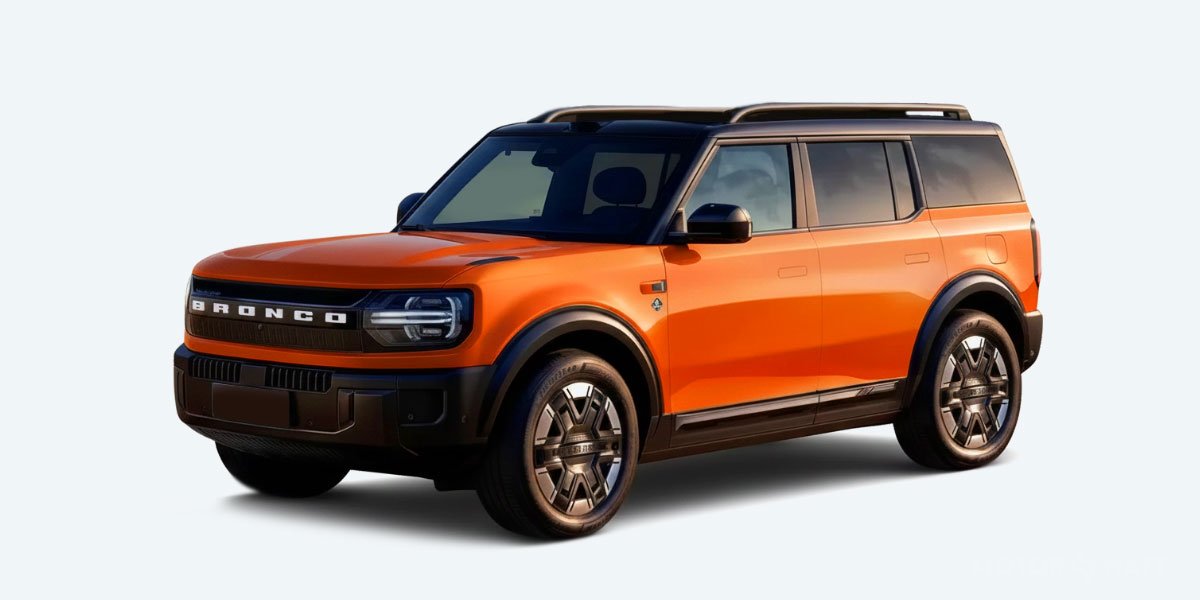
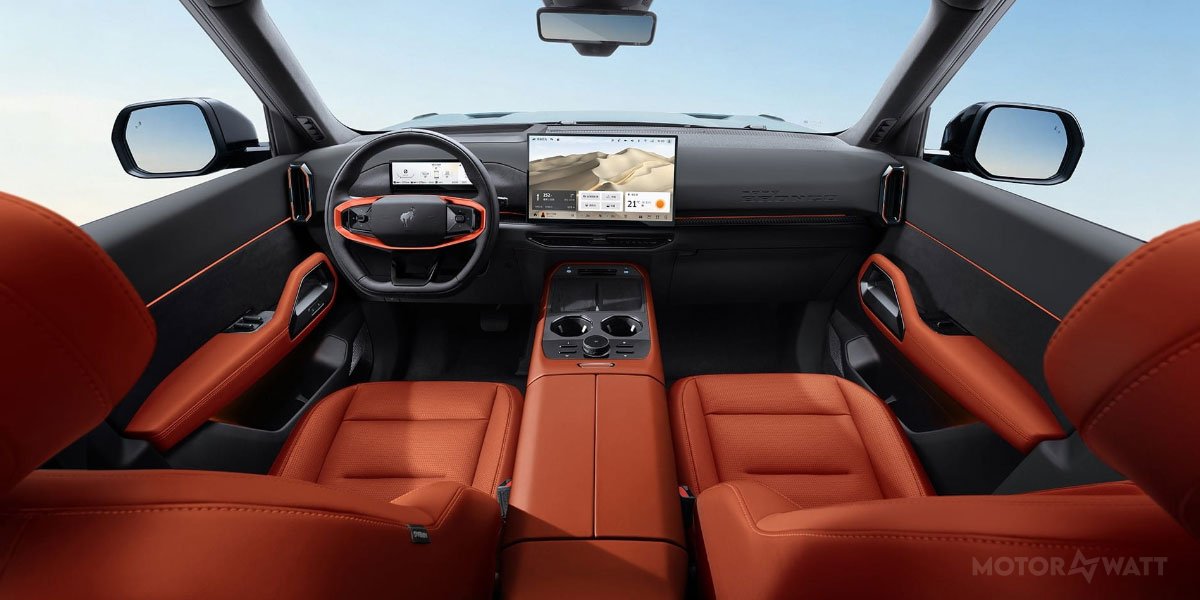
Exterior and Interior photos of Ford Bronco EV


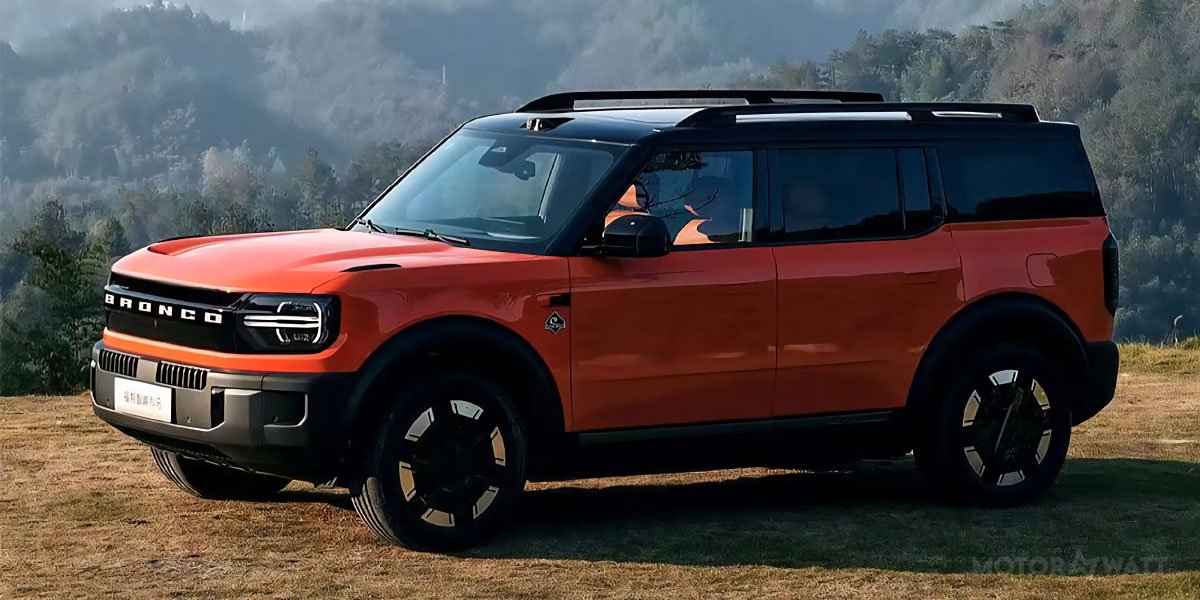
Ford Bronco EV Review: Early Impressions & Tech Analysis
Ford Bronco EV overview and market context
Ford Bronco EV arrives as an electric off road SUV aimed straight at drivers who want trail toys with real daily range. The shape stays old school square, yet the tech underneath reads like a modern adventure EV cheat sheet. Built in the United States, with global ambitions, it targets buyers who want a mid size electric SUV that feels ready for rocks and Costco runs in the same day. The cabin and chassis are tuned for family adventure vehicle duty, not just weekend toys. And in a market where every battery electric 4x4 fights for attention, the badge and off road reputation do a lot of heavy lifting.
- The modular SUV body keeps the classic stance while packaging a large capacity battery pack under the floor for stability and space.
- Initial sales are projected from late 2025 with the 2026 model year, lining up with the surge of trail focused electric SUV rivals.
- A starting price of $55,000 (≈€47,190 / £41,250) positions the base trim in premium off road territory yet under some luxury EVs.
- The design leans on removable doors and roof, plus a rugged electric Bronco profile that instantly signals playtime to anyone nearby.
- Underpinning the story is long range electric driving and fast charging off road capability for drivers who split time between urban streets and backcountry tracks.
Battery, Range and Performance:
Battery, Charging and Range
The electric hardware centers on a 105 kWh pack that feeds dual motors and anchors the all wheel drive EV layout. On the generous CLTC cycle, the official number lands at 650 km, roughly 404 miles, though real world EPA style range will sit closer to 400 km or about 249 miles. That is plenty for a weekend in the desert with some highway stints mixed in. Energy density and cooling design help the large capacity battery pack stay composed when you hammer through sand washes under summer heat. DC fast charging can take the pack from 10 to 80 percent in around 40 minutes, letting you soak in a coffee while electrons refill.
- Battery capacity around 105 kWh supports long range electric driving for mixed city and highway use.
- Estimated CLTC range of 650 km, about 404 miles, with an expected EPA rating near 400 km or 249 miles.
- DC fast charging from 10 to 80 percent in roughly 40 minutes keeps road trips and trail days flowing.
- Regenerative braking system with one pedal driving mode suits steep descents and stop and go commuting alike.
- Charging power is expected in the high triple digit kilowatt range, trimming downtime during long hauls.
Performance Specifications
Output clocks in at an estimated 332 kW, or 445 horsepower, backed by roughly 650 Nm of torque, about 479 pound feet, feeding all four wheels. Zero to 100 km per hour, or 62 miles per hour, lands around 5.8 seconds, quick enough to dust many gas trucks from the stoplight. Top speed sits near 160 km per hour, about 99 miles per hour, which is more than enough for a lifted box on knobby tires. The battery electric 4x4 layout keeps weight low in the chassis, sharpening steering response on pavement and tightening control over loose gravel. A terrain management system coordinates the dual motors, traction control, and stability software so the rig claws forward even when diagonal wheels hang in the air.
- Estimated 332 kW output equals 445 horsepower for strong highway passing and trail climbs.
- Torque around 650 Nm, roughly 479 pound feet, hits instantly for confident low speed crawling.
- Zero to 100 km per hour in about 5.8 seconds keeps pace with many performance crossovers.
- Top speed near 160 km per hour, around 99 miles per hour, fits the off road tire and aero profile.
- G.O.A.T. driving modes tune the all wheel drive EV system for Sand, Mud, Rock, and Slippery surfaces.
Across the trim walk, from Base through Big Bend, Outer Banks, Badlands, and up to Raptor, calibration tweaks bring different wheel and tire packages, suspension tunes, and price steps. The Base sits around $55,000 (≈€47,190 / £41,250), Big Bend near $59,500 (≈€51,051 / £44,625), Outer Banks at $64,000 (≈€54,912 / £48,000), Badlands at $69,500 (≈€59,631 / £52,125), and Raptor pushing toward $85,000 (≈€72,930 / £63,750).
Exterior and Interior Features
Exterior design and details
The shell keeps the iconic squared shoulders, short overhangs, and upright glass that fans know, now adapted to a trail focused electric SUV package. Length measures about 4,811 millimeters, or 189.4 inches, riding on a 2,946 millimeter wheelbase, roughly 116 inches, which stabilizes high speed runs on dirt. Width sits near 1,928 millimeters, or 75.9 inches, with height at 1,854 millimeters, or about 73 inches, giving that tall, confident stance fans crave. Full width LEDs, circular running lights, and a closed front grille signal battery power while holding onto the classic face. Underbody protection and chunky 17 inch alloys on all terrain rubber reinforce the adventure EV message.
Interior layout and technology
Inside, the cabin layout favors durability over dainty trim, with rubberized surfaces and marine grade interior materials that shrug off mud and water. A 12 inch SYNC 4 infotainment screen sits in the middle of the dash, with a matching digital instrument cluster in front of the driver. The SYNC 4 infotainment stack handles wireless Apple CarPlay and Android Auto, plus trail focused navigation, turning the cockpit into a command center rather than a simple gauge pod. Five passengers enjoy generous headroom thanks to the tall roof, while cargo space behind the second row lands around 850 liters, or about 30 cubic feet. Ford Co Pilot360 safety and a crisp digital instrument cluster reinforce the high tech off road mission without feeling clinical.
Pros and Cons: everyday usability and trail focus
Pros
- High ground clearance, modular SUV body, and removable doors and roof create a true open air trail focused electric SUV experience.
- Instant torque from the battery electric 4x4 powertrain makes steep climbs feel drama free even with a full cabin.
- Long range electric driving figures support both daily commuting and long weekend getaways.
- SYNC 4 infotainment with large touchscreen and over the air updates keeps tech fresh over time.
- Ford Co Pilot360 safety brings modern driver assist features to rugged terrain where extra awareness pays off.
Cons
- Curb weight around 2,450 kilograms, roughly 5,401 pounds, means tight switchbacks demand some patience.
- Boxy aerodynamics hinder highway efficiency compared to sleek crossover shaped EVs.
- All terrain tires add noise on smooth asphalt and can trim real world range at freeway speeds.
- Charging infrastructure near remote trailheads still lags behind urban corridors in many regions.
- Higher trims like Raptor push pricing closer to luxury flagships from established EV brands.
Prices depending on the trim and options:
| Bronco EV Base | $55,000 (≈€47,190 / £41,250) |
| Bronco EV Big Bend | $59,500 (≈€51,051 / £44,625) |
| Bronco EV Outer Banks | $64,000 (≈€54,912 / £48,000) |
| Bronco EV Badlands | $69,500 (≈€59,631 / £52,125) |
| Bronco EV Raptor | $85,000 (≈€72,930 / £63,750) |
Summary: why Bronco EV matters in the adventure EV world
For drivers who want an electric trail rig that still plays nicely as a family adventure vehicle, Ford Bronco EV lines up as a compelling option. Range around 404 miles on optimistic cycles, stout dual motor power, and a terrain management system with G.O.A.T. driving modes speak directly to off highway fans. The marine grade interior and removable doors and roof encourage owners to use it hard rather than park it as driveway art. SYNC 4 infotainment, Ford Co Pilot360 safety, and a digital instrument cluster tighten the tech story without stripping away character. In a market stuffed with polished crossovers, the battery electric 4x4 charm here feels refreshingly honest.
Watch the Video Overview

Full specifications
The product is the Ford Bronco EV (also referred to as Ford Bronco New Energy BEV in China market sources), a 2026 full-electric mid-size SUV. Data primarily from the provided URL and consistent across sources indicates it's a China-specific model with no official US Ford Bronco EV equivalent (US Bronco remains ICE). Specs focus on the BEV variant.
Model Specs
| Specification | Actual Data |
|---|---|
|
Model name
|
Ford Bronco EV
|
|
Model Year
|
2026
|
|
Country of Origin
|
China
|
|
Manufacturer
|
Ford (Jiangling Ford joint venture)
|
|
Body Type
|
SUV
|
|
Power Type
|
Full-electric
|
Performance
| Specification | Actual Data |
|---|---|
|
Powertrain
|
Dual electric motors
|
|
Drive Type
|
AWD
|
|
Peak Power Output
|
332 kW - 445 hp
|
|
Maximum Speed
|
160 km/h - 99 mph
|
|
Acceleration 0-62 mph (0-100 km/h)
|
5.8 seconds
|
Battery and Charging
| Specification | Actual Data |
|---|---|
|
Battery Capacity
|
105 kWh
|
|
Battery Type
|
LFP Blade
|
|
Charging Time (10% to 80%)
|
Roughly 40 minutes
|
|
Fast Charging Rate
|
High triple digit kW range
|
Estimated Range Data
| Specification | Actual Data |
|---|---|
|
CLTC Range
|
650 km - 404 miles
|
|
Real-world Estimate (EPA style)
|
400 km - 249 miles
|
Body Specifications
| Specification | Actual Data |
|---|---|
|
Length
|
5025 mm - 197.8 inches
|
|
Width
|
1960 mm - 77.2 inches
|
|
Height
|
1815 mm - 71.5 inches
|
|
Wheelbase
|
2950 mm - 116.1 inches
|
|
Curb Weight
|
2630 kg - 5798 lbs
|
Exterior Design Features
| Specification | Actual Data |
|---|---|
|
Off-road Capabilities
|
G.O.A.T. driving modes, terrain management system, underbody protection, removable doors and roof
|
|
Wheels
|
Chunky 17 inch alloys on all terrain rubber
|
Interior Design and Materials
| Specification | Actual Data |
|---|---|
|
Materials
|
Rubberized surfaces, marine grade interior materials
|
|
Seating Capacity
|
5
|
|
Cargo Space
|
Around 850 liters - 30 cubic feet behind second row
|
Cabin Technical Features
| Specification | Actual Data |
|---|---|
|
Displays
|
12 inch SYNC 4 infotainment screen, matching digital instrument cluster
|
|
Infotainment
|
SYNC 4 with wireless Apple CarPlay and Android Auto, trail focused navigation, over the air updates
|
|
Drive Assistants
|
Ford Co-Pilot360 (automatic emergency braking, lane keeping aids, advanced stability control)
|
|
Other
|
Regenerative braking with one pedal driving mode
|
F.A.Q. about Ford Bronco EV
What kind of battery capacity and driving range can buyers expect
The pack in the Bronco EV sits around 105 kWh, supporting roughly 650 km of CLTC range, about 404 miles. In more realistic mixed driving, Ford Bronco EV should deliver near 400 km, around 249 miles, on a charge when driven sensibly.
How quick is the electric off road SUV from a standstill
Estimated acceleration from zero to 100 km per hour, about 62 miles per hour, lands at roughly 5.8 seconds. That places the Bronco EV squarely in performance crossover territory, even with chunky all terrain rubber mounted.
What is the top speed for highway cruising and overtakes
Maximum speed is projected near 160 km per hour, around 99 miles per hour, which suits its off road tire profile. Beyond that, aero drag and tire design make higher speeds less relevant than mid range punch for passing moves.
How much power and torque does the dual motor setup deliver
Total output sits close to 332 kW or 445 horsepower, with torque around 650 Nm, about 479 pound feet. That instant twist works especially well for steep gravel climbs and quick merges from short on ramps.
How long does fast charging usually take from low state of charge
On a capable DC fast charger, moving the pack from about 10 to 80 percent should take roughly 40 minutes. Energy added in that window covers hundreds of kilometers, or well over one hundred miles, of mixed driving.
What is the price range for the different trims in North America
Base Ford Bronco EV pricing starts around $55,000 (≈€47,190 / £41,250) with higher trims stepping up from there. Raptor spec climbs toward $85,000 (≈€72,930 / £63,750), reflecting added off road hardware and performance tuning.
How roomy is the cabin and cargo area for family use
The body stretches about 4,811 millimeters, 189.4 inches, on a 2,946 millimeter wheelbase, around 116 inches, offering generous space. Cargo volume behind the second row sits near 850 liters, about 30 cubic feet, more than enough for camping gear.
What driver assistance and safety technology is available
The SUV carries Ford Co Pilot360 with features like automatic emergency braking, lane keeping aids, and advanced stability control. These systems work with the all wheel drive powertrain to maintain composure on wet pavement and loose surfaces.
How capable is it off road compared to traditional gas SUVs
With G.O.A.T. modes, strong torque, and a high riding modular SUV body, capability rivals many ladder frame rigs. Instant electric response and precise traction control often allow more controlled crawling than similar gas powered machines.