
Serve Robotics Company Overview
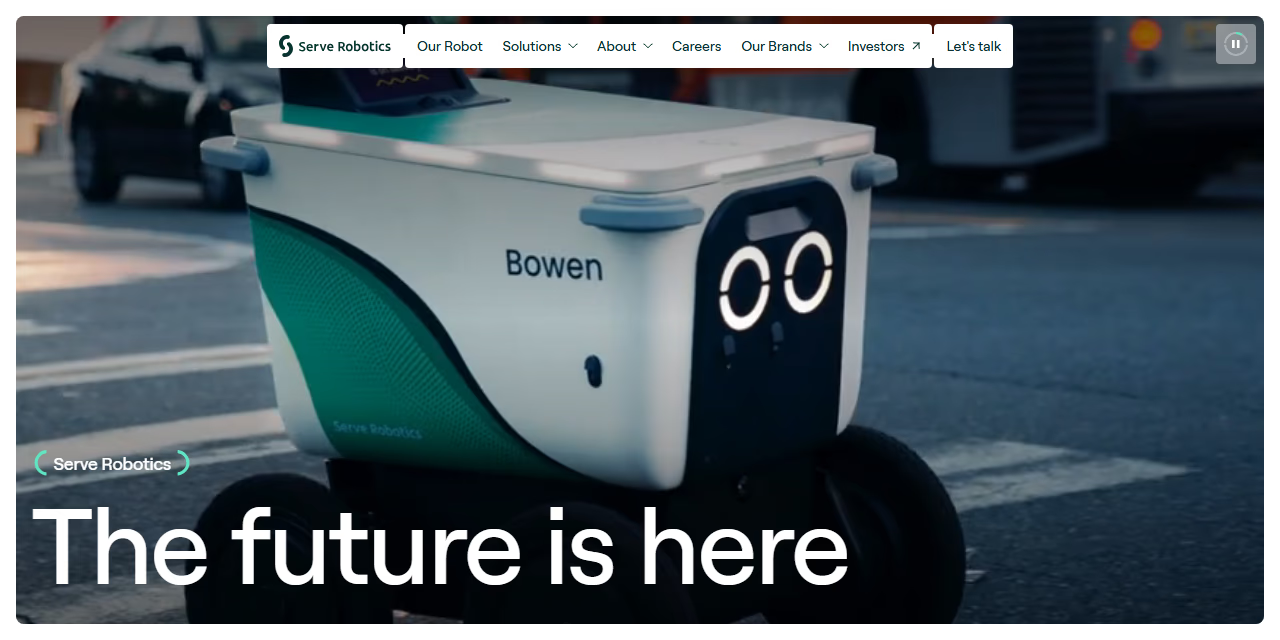
Serve Robotics is a United States company that designs and operates electric Delivery Robots for restaurants, delivery platforms and healthcare organizations. Its service brings together robot hardware, navigation software and fleet operations for short neighborhood trips and internal hospital transport. Outdoor robots carry merchant orders to nearby customers, who collect their purchases at the curb. The portfolio also includes Diligent Robotics’ Moxi robots, which transport medications, laboratory samples and supplies inside hospitals. Remote supervisors assist the sidewalk fleet with difficult situations, while field staff recover robots needing physical help. The technology originated at Postmates in 2017, and Serve became independent in 2021.
Manufacturer Description
Serve Robotics manages short delivery trips
Serve Robotics designs and operates electric delivery robots for restaurants, delivery platforms and healthcare organizations in the United States. Its service brings together robot hardware, navigation software and fleet operations, rather than equipment sales alone.
The technology originated inside Postmates in 2017. Serve became independent in 2021 following Uber’s acquisition of Postmates. Its outdoor fleet focuses on carrying small orders between participating merchants and nearby customers.
Delivery marketplace integration connects robot transport with existing ordering channels. For merchants, the service therefore involves both physical transport and coordination with ordering platforms.
Separate robots for sidewalks and hospitals
Merchant staff load orders into the outdoor robot’s cargo compartment. Recipients collect purchases using the delivery app or instructions displayed on the robot’s screen. The documented handoff takes place at the curb.
Serve’s third-generation sidewalk robot has a larger cargo compartment, revised suspension and increased battery capacity.
In January 2026, Serve completed its acquisition of Diligent Robotics, adding Moxi hospital robots to its portfolio. Moxi transports medications, laboratory samples and supplies for clinical teams. Elevators and badge-controlled access support its movement within facilities, a separate setting from outdoor delivery.
Autonomy backed by operational support
Serve uses cameras, lidar and ultrasonic sensors to identify pedestrians, obstacles and other environmental features. The company describes its sidewalk robots as capable of Level 4 autonomy within defined conditions.
Human support remains part of fleet operations. Remote supervisors can assist with crossings or difficult situations. Field staff recover robots requiring physical help, while operating depots provide charging and maintenance.
Serve’s published safety design includes autonomous collision avoidance and mechanical braking. The braking system is intended to stop a robot following a power or computing failure.
Who should include Serve Robotics among their top picks?
Merchants seeking frequent, short deliveries and healthcare organizations handling repetitive internal transport are relevant customers. Each application has distinct operating requirements: neighborhood routes for outdoor robots and facility access for Moxi.
Outdoor service depends on participating merchants, supported neighborhoods and navigable routes. Customers should also account for curbside collection rather than expecting a courier to enter their building. Those boundaries matter when assessing whether robot delivery suits an existing ordering and collection process.