Air ONE: Price, Range, and Technical Specs
Air ONE is a 2026 two seat electric vertical takeoff and landing aircraft designed for private ownership. Built in the USA, it features a 74 kWh battery, 177 km flying range, 250 km/h top speed, and 771 hp from eight electric motors. Priced from $150,000 USD, it offers 60 minutes of flight time and foldable wings for garage storage, positioning it as a premium personal eVTOL in advanced air mobility.

| Starting Price | $150,000 |
| Model Year | 2026 |
| Country of Manufacturing | USA |
| Flying Range | 110 mi |
| Flying Time | 60 min |
| Battery Size | 74 kWh |
* Minimum price set for the base trim by the manufacturerr, excluding taxes and additional options

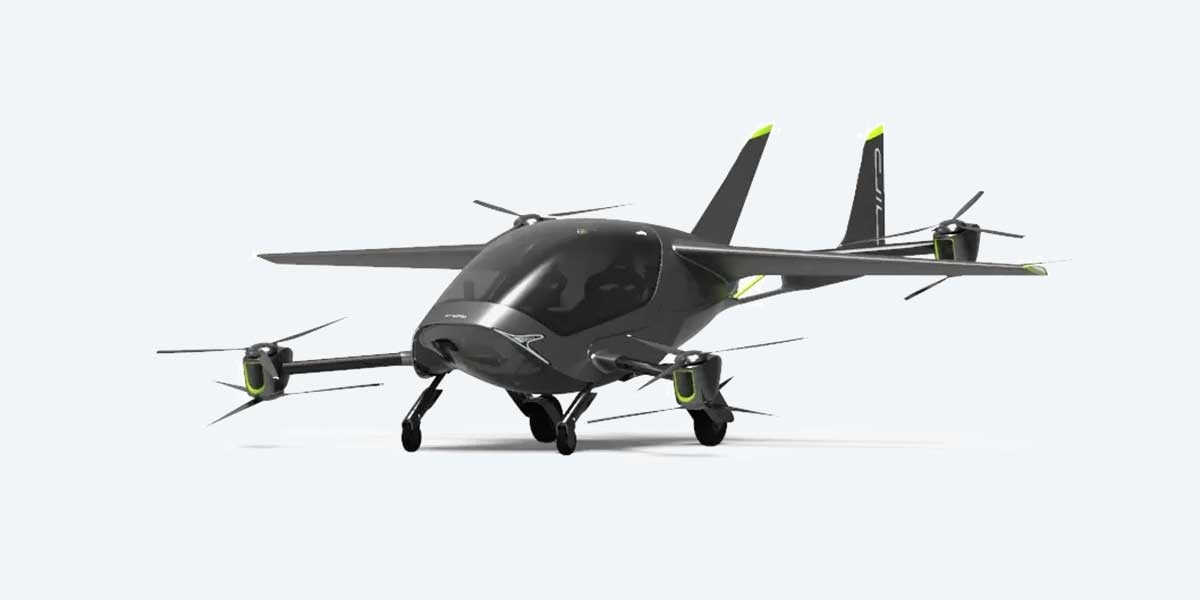
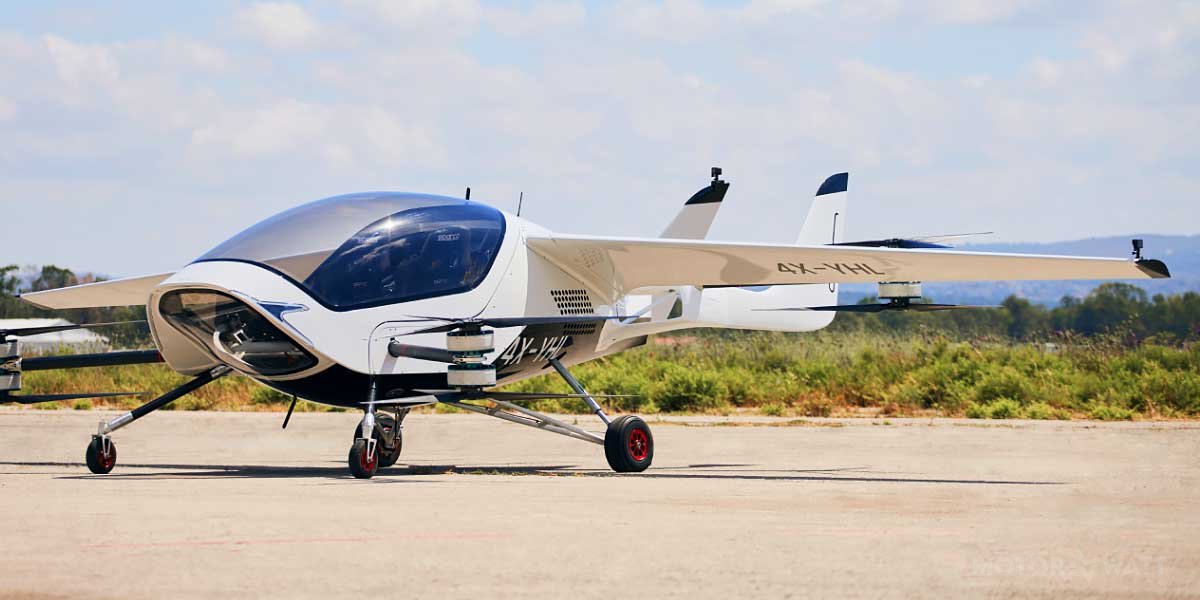
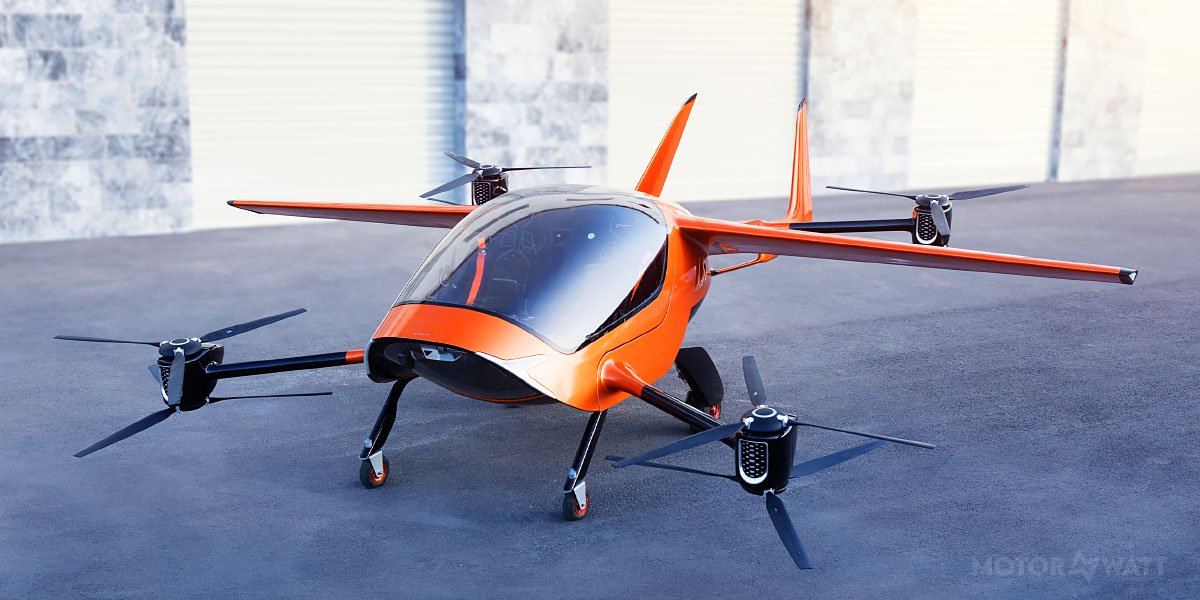
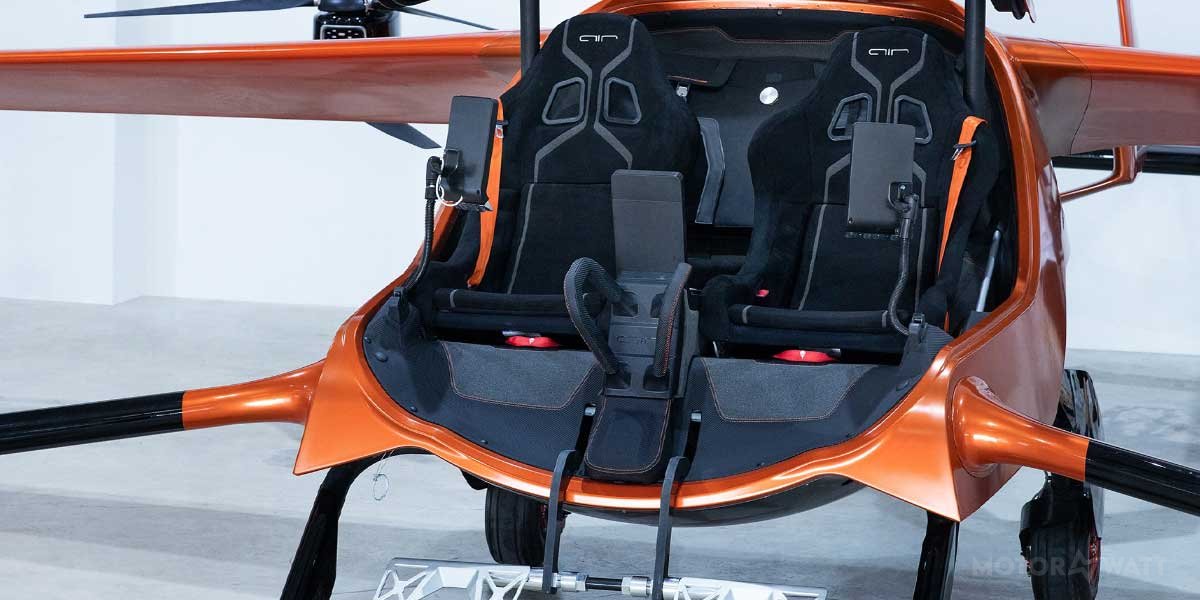
Exterior and Interior photos of Air ONE



Air ONE Review: Early Impressions & Tech Analysis
Air ONE Introduction:
Air ONE lands in 2026 as a personal electric vertical takeoff and landing aircraft built for private owners who value speed and autonomy. Manufactured in the USA for the 2026 model year, it delivers a rare blend of advanced air mobility engineering and garage practicality. With a 74 kWh battery, 177 km flying range, and 250 km/h top speed, it aims squarely at affluent tech enthusiasts. Starting at $150,000 USD ($126,477 EUR), it undercuts many experimental aircraft while offering two seats and 250 kg payload capacity. AIR positions it as a sport utility vehicle for the skies. And that phrase fits. It lifts vertically, cruises efficiently, then folds its wings to fit inside a standard garage.
- Production phase begins in early 2026, transitioning from prototype to customer deliveries.
- Base price starts at $150,000 USD ($126,477 EUR), targeting private ownership rather than fleet service.
- Collapsible 7.0 m wingspan retracts for garage storage convenience.
- Two-seat configuration supports private commuting and recreational aviation.
What is the Price of Air ONE in 2026?
The Air ONE price starts at $150,000 USD ($126,477 EUR). That positions it within reach of luxury sports car buyers who want altitude instead of asphalt. Optional trims raise the ceiling depending on mission profile and equipment focus.
| Trim Level | PRICE | KEY FEATURES |
|---|---|---|
|
Base Configuration
|
74 kWh battery, 177 km range, 250 km/h top speed, 771 hp output, full digital flight deck, Fly by Intent control system.
|
|
|
Sport Package
|
Enhanced flight tuning, upgraded interior finishes, performance-focused calibration, advanced navigation display enhancements.
|
|
|
Cargo Variant
|
Optimized payload configuration, 250 kg cargo support, reinforced storage modules for utility missions.
|
Each configuration retains the same electric propulsion core. The Sport trim refines responsiveness. The Cargo variant emphasizes payload efficiency. Buyers choose based on mission type rather than speed, since all share identical battery and motor architecture.
Engine, Battery, and Performance Specs:
Battery & Charging Specifications
The 74 kWh lithium battery anchors the platform. That capacity rivals premium electric SUVs, yet weighs less due to aerospace packaging. Flying range reaches 177 km or about 110 miles per charge. Charging from 0 to 100 percent completes in 60 minutes. Fast charging from 20 to 80 percent takes roughly 30 minutes. The battery sits low within the airframe, enhancing center of gravity stability during vertical lift and descent.
- Battery Capacity: 74 kWh
- Flying Range: 177 km (110 miles)
- Charging Time: 60 min full charge
- Fast Charge: 20–80 percent in 30 min
Electric Motor Specifications
Eight independent electric motors generate a combined 771 hp or about 575 kW. That output enables vertical lift even at maximum takeoff weight of 1,220 kg or 2,690 lb. Redundant propulsion architecture improves operational safety. Distributed thrust balances stability during hover transitions. And because electric torque arrives instantly, throttle response feels immediate and precise.
- Total Power: 771 hp (575 kW)
- Motors: 8 independent electric units
- Max Takeoff Weight: 1,220 kg (2,690 lb)
- Curb Weight: 970 kg (2,138 lb)
Performance Specifications
Top speed reaches 250 km/h or 155 mph. Cruise speed stabilizes around 161 km/h or 100 mph. Flying time extends up to 60 minutes depending on load and weather. Vertical liftoff occurs smoothly through automated flight control algorithms. The software transitions from hover to wing borne cruise seamlessly.
- Top Speed: 250 km/h (155 mph)
- Cruise Speed: 161 km/h (100 mph)
- Flying Time: 60 minutes
Owners gain independence from congested highways. They trade traffic lights for open sky corridors. And they enjoy private flight without hangar costs.
Exterior and Interior Features
Exterior Design
The exterior profile emphasizes aerodynamic efficiency. Fixed wings span 7.0 m or 22.9 ft. Length measures 6.0 m or 19.7 ft. Height stands at 2.0 m or 6.6 ft. Collapsible wings retract to garage width. LED signature lighting integrates into wing edges and stabilizers. The canopy opens upward, granting 360 degree visibility. The structure avoids rotor tilting complexity, reducing mass and maintenance exposure.
Interior & Technology
Inside, the cockpit feels closer to a grand tourer than a trainer aircraft. A digital flight deck dominates the instrument panel. High resolution displays present flight data and navigation. Fly by Intent control simplifies joystick commands into coordinated maneuvers. LIDAR terrain mapping supports obstacle detection. A ballistic parachute system protects the entire airframe. Two sculpted seats support long flight comfort using lightweight sustainable materials.
Owners appreciate storage flexibility. Wings fold. Cargo supports 250 kg or 551 lb. Technology supports real time weather integration and mobile app flight planning. And visibility feels expansive.
Pros and Cons:
Pros
- 771 hp electric output with eight motor redundancy
- 177 km flying range with rapid charging
- Garage storage capability with collapsible wings
- Two seat configuration for private ownership
- Advanced Fly by Intent control system
Cons
- Private pilot license required in several regions
- Premium pricing compared to ground EVs
- Limited 60 minute endurance per charge
Market position & Expert Data:
The Air ONE occupies a distinctive slot within Advanced Air Mobility. Nearly 3,000 pre orders globally indicate early adopter confidence. According to Reuters, global eVTOL investment surpassed $8 billion in 2025, highlighting sector momentum. Research shows increasing rural commuter interest across Germany and the United Kingdom.
Data from McKinsey & Company projects Advanced Air Mobility could reach $20 billion annually by 2030. Industry analysts emphasize personal ownership as a high margin niche. Compared with air taxi models, private aircraft buyers seek autonomy. The garage storage feature addresses a cost pain point for traditional aviation.
Summary:
Air ONE delivers personal electric flight in a package that fits inside a garage. It pairs 771 hp output with a 74 kWh battery and 177 km range. Pricing starts at $150,000 USD ($126,477 EUR), placing it within luxury sports car territory. For affluent commuters craving speed and independence, few options match its utility and engineering ambition.
Watch the Video Overview


Full specifications
Model Specs
| Specification | Actual Data |
|---|---|
|
Model Name
|
Air ONE
|
|
Model Year
|
2026
|
|
Vehicle Class
|
Personal Electric Vertical Takeoff and Landing Aircraft
|
|
Manufacturer
|
AIR
|
|
Country of Manufacture
|
USA
|
|
Seating Capacity
|
2 Passengers
|
Performance
| Specification | Actual Data |
|---|---|
|
Power Output
|
771 hp (575 kW)
|
|
Maximum Speed
|
250 km/h (155 mph)
|
|
Cruise Speed
|
161 km/h (100 mph)
|
|
Propulsion System
|
8 Independent Electric Motors
|
Battery and Charging
| Specification | Actual Data |
|---|---|
|
Battery Capacity
|
74 kWh
|
|
Charging Time 0–100%
|
60 minutes
|
|
Fast Charging 20–80%
|
30 minutes
|
Estimated Range Data
| Specification | Actual Data |
|---|---|
|
Maximum Flying Range
|
177 km (110 miles)
|
|
Maximum Flying Time
|
60 minutes
|
Body Specifications
| Specification | Actual Data |
|---|---|
|
Length
|
6.0 m (19.7 ft)
|
|
Wingspan
|
7.0 m (22.9 ft)
|
|
Height
|
2.0 m (6.6 ft)
|
|
Curb Weight
|
970 kg (2,138 lb)
|
|
Maximum Takeoff Weight
|
1,220 kg (2,690 lb)
|
|
Cargo Capacity
|
250 kg (551 lb)
|
Exterior Design Features
| Specification | Actual Data |
|---|---|
|
Wing Configuration
|
Fixed Wing with Collapsible Mechanism
|
|
Lighting
|
Integrated LED Signature Lighting
|
|
Canopy
|
Pop Top 360 Degree Visibility
|
Interior Design and Materials
| Specification | Actual Data |
|---|---|
|
Seating
|
2 Ergonomic Sculpted Seats
|
|
Upholstery
|
Lightweight Sustainable Synthetic Materials
|
Cabin Technical Features
| Specification | Actual Data |
|---|---|
|
Flight Deck
|
Digital Flight Display with Integrated Navigation
|
|
Control System
|
Fly by Intent Joystick Logic
|
|
Safety Systems
|
LIDAR Terrain Mapping, Obstacle Avoidance, Ballistic Parachute
|
F.A.Q. about Air ONE
What is the real flying range of a personal electric eVTOL on a single charge?
Air ONE delivers a certified flying range of 177 km or about 110 miles per charge under standard conditions.
- Cruise speed around 161 km/h or 100 mph maximizes efficiency
- Higher payload reduces total range slightly
- Strong headwinds may shorten endurance
What is the usable battery capacity in this electric vertical takeoff and landing aircraft?
Air ONE uses a 74 kWh battery pack mounted low in the airframe to enhance stability during hover and cruise.
- Energy capacity: 74 kWh
- Flying time: up to 60 minutes
- Designed for rapid AC and DC charging
How long does it take to fully charge a 74 kWh electric aircraft battery?
Air ONE charges from 0 to 100 percent in about 60 minutes using compatible high output charging equipment.
- 20 to 80 percent in approximately 30 minutes
- Home compatible charging options available
- Fast turnaround supports daily commuter use
How does electric aircraft performance compare with traditional piston aircraft?
The distributed electric propulsion system produces 771 hp or 575 kW, delivering instant torque and smoother vertical liftoff than many light piston aircraft.
- Top speed: 250 km/h or 155 mph
- Eight motor redundancy enhances stability
- Software managed flight envelope improves safety
Can a personal eVTOL aircraft fit inside a standard residential garage?
Yes. Collapsible wings retract from a 7.0 m span to garage friendly dimensions, allowing storage in a single parking space.
- Wingspan extended: 7.0 m or 22.9 ft
- Length: 6.0 m or 19.7 ft
- Height: 2.0 m or 6.6 ft
What is the purchase price in the USA for a private electric aircraft?
Air ONE starts at $150,000 USD or about $126,477 EUR, positioning it near high performance luxury vehicles rather than traditional aircraft pricing tiers.
- Sport Package: $175,000 USD or $147,556 EUR
- Cargo Variant: $165,000 USD or $139,145 EUR
- Two seat configuration included
What safety systems are integrated into modern advanced air mobility vehicles?
The platform includes LIDAR based terrain mapping, obstacle avoidance sensors, automated flight control software, and a ballistic parachute system for full airframe recovery.
- Eight motor redundancy for propulsion backup
- Digital flight deck with real time weather integration
- Fly by Intent simplified control logic
Is private electric vertical takeoff flight available for purchase in the USA and Europe?
Air ONE enters production in 2026 with expanding availability in the United States and selected European markets, subject to local pilot licensing regulations.
- USA benefits from evolving FAA MOSAIC pathways
- European buyers may require private pilot licensing
- Growing interest in Germany and the UK
Can electric aircraft operate using renewable energy sources?
Yes. Charging infrastructure can connect to solar or wind powered grids, enabling low emission advanced air mobility operations with reduced carbon output compared to combustion aviation.
- Zero in flight emissions
- Electric propulsion reduces noise footprint
- Supports sustainable aviation initiatives