Wisk Aero Generation 6
Wisk Aero Generation 6 is a 2026 autonomous electric vertical takeoff and landing aircraft developed in the USA by a Boeing subsidiary. It features a 120 kWh battery, 144 km flying range, 222 km/h top speed, and 12 motor lift plus cruise configuration. Designed for four passengers, it targets urban air mobility networks with rapid 15 minute DC charging and Level 4 pilotless operation.
User Rating: 3 / 5 (55 votes)


| manufactured in | USA |
| model year | 2026 |
| battery capacity (kWh) | 120 |
| flight altitude (m) | 1219 |
| road range (km) | 0 |
| flying range (km) | 144 |
| max. speed (km/h) | 222 |
| weight (kg) | 1088 |
| passengers (qty) | 4 |
| cargo capacity (kg) | 408 |
* Minimum price set for the base trim by the manufacturer

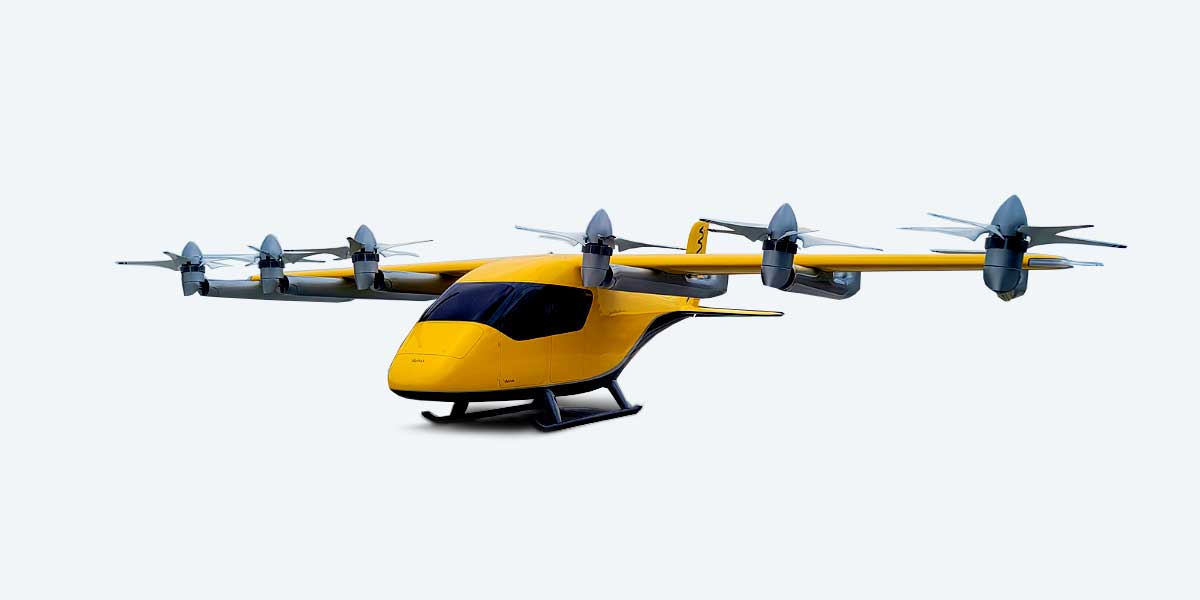
Wisk Aero Generation 6 Review
Wisk Aero Generation 6 Introduction:
Wisk Aero Generation 6 enters 2026 as a fully autonomous electric air taxi engineered in the USA. Developed by a Boeing-owned subsidiary, it stands at the front of urban air mobility initiatives. It targets pilotless passenger transport with a four-seat cabin and a 120 kWh battery system. The aircraft cruises at 222 km/h, equal to 138 mph, and flies up to 144 km or 89 miles per charge. With a projected base valuation of $2,500,000 USD ($2,103,750 EUR), it positions itself in the premium advanced air mobility tier. Built around distributed electric propulsion and Level 4 autonomy, it aims squarely at metropolitan commuters seeking speed and time savings.
- Manufactured in the United States under Boeing-backed engineering oversight.
- Model year 2026 with first flight completed in late 2025.
- Base estimated value $2,500,000 USD ($2,103,750 EUR) for fleet operators.
- Designed for high-frequency urban and regional hops within vertiport networks.
- Configured with 12 motors and 12 propellers for lift plus cruise efficiency.
What is the Price of Wisk Aero Generation 6 in 2026?
The Wisk Aero Generation 6 price starts at an estimated $2,500,000 USD ($2,103,750 EUR). That valuation reflects its positioning as a premium autonomous eVTOL within fleet-operated urban air mobility networks.
| Trim Level | PRICE | KEY FEATURES |
|---|---|---|
|
Base Fleet Configuration
|
120 kWh battery. Up to 144 km or 89 miles of flying range. Cruises at 222 km/h or 138 mph. 12 electric motors with lift plus cruise layout. Four passenger cabin with autonomous flight stack and whole airframe parachute.
|
As a fleet asset, pricing reflects certification complexity, composite airframe construction, and advanced autonomy hardware. Operators evaluate value through passenger throughput and $3.00 USD per mile service modeling. That operational model shapes revenue projections rather than retail ownership.
Engine, Battery, and Performance Specs:
Battery & Charging Specifications
The 120 kWh battery pack supplies energy for 144 km of flight, roughly 89 miles with reserves. DC fast charging reaches full capacity in about 15 minutes. Such rapid turnaround supports high-frequency shuttle cycles between vertiports. Operating altitude ranges up to 1,219 meters, equal to 4,000 feet, ideal for urban corridors.
- Battery capacity 120 kWh
- Flying range 144 km or 89 miles
- DC charging time 15 minutes
- Maximum altitude 1,219 m or 4,000 ft
Electric Motor Specifications
Twelve electric motors generate an estimated combined output near 600 kW. That equals roughly 805 horsepower. The architecture includes six tilting five blade propellers and six fixed four blade units. Carbon fiber composites keep curb weight at 1,088 kg, about 2,398 lbs.
- 12 motors and 12 propellers
- Estimated total output 600 kW or 805 hp
- Weight 1,088 kg or 2,398 lbs
- Payload capacity 408 kg or 900 lbs
Performance Specifications
Top speed reaches 222 km/h, equivalent to 138 mph or 120 knots. Transition from vertical to wing borne flight takes around 30 seconds. Cruise altitude spans 762 to 1,219 meters, or 2,500 to 4,000 feet. Acceleration feels linear, propelled by high torque electric motors.
- Top speed 222 km/h or 138 mph
- Transition time about 30 seconds
- Cruise altitude up to 4,000 ft
- Four passenger capacity
For operators, such specs promise low vibration and predictable routing. For passengers, silence replaces rotor roar. Efficiency meets practicality in tight city grids.
Exterior and Interior Features
Exterior Design
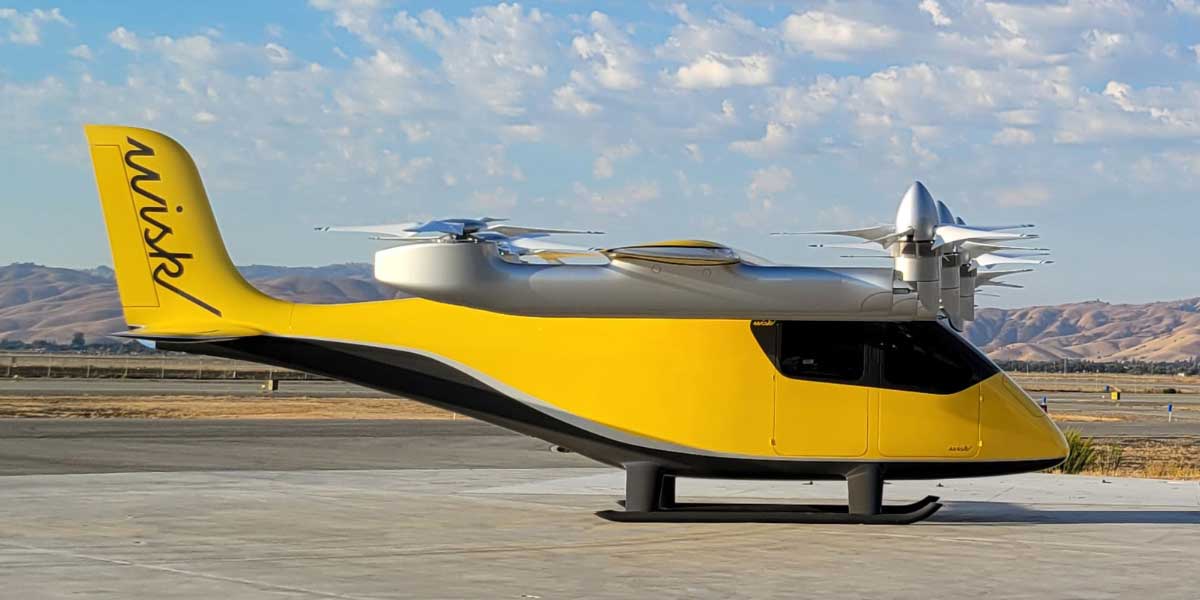
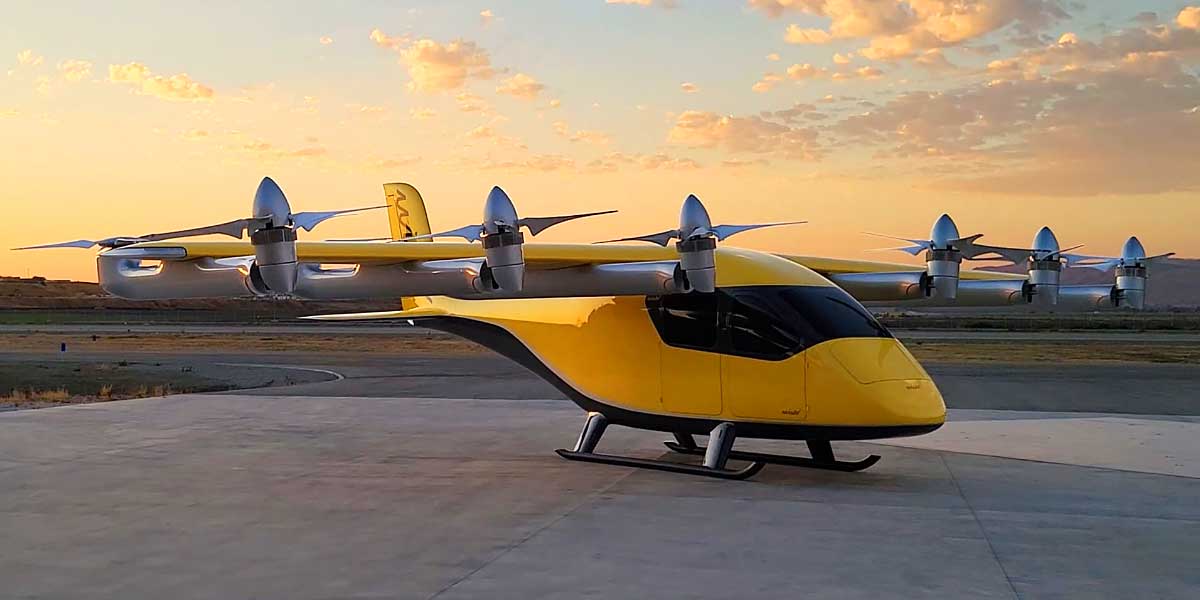
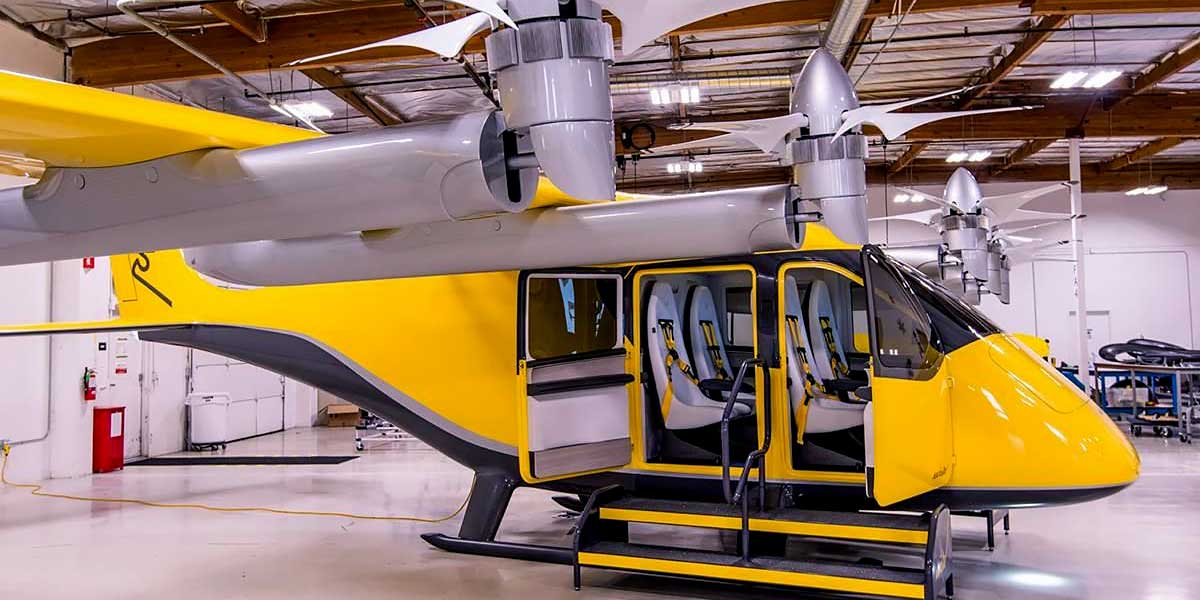
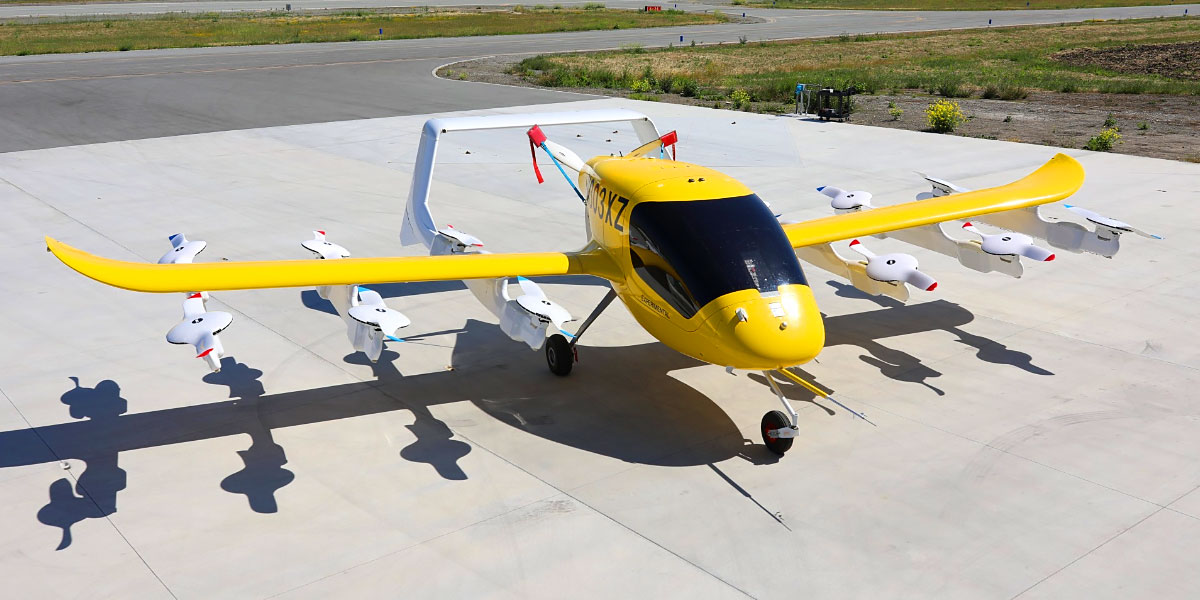
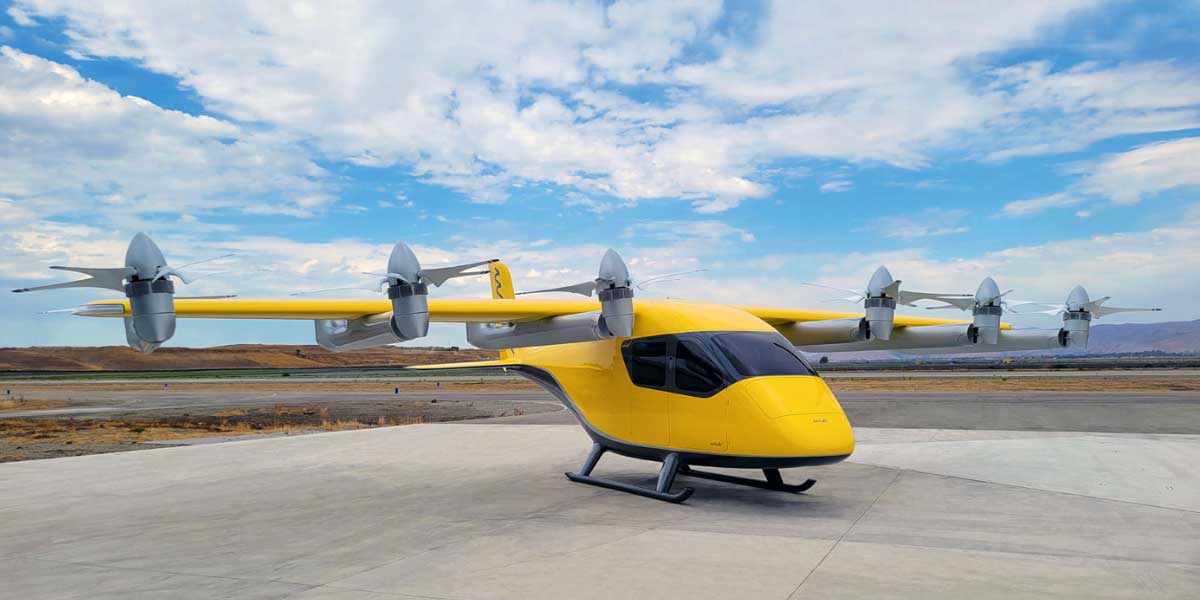
The high wing spans 15.24 meters, equal to 50 feet. Lift plus cruise geometry enhances aerodynamic stability. Twelve propellers mount on extended booms above passenger entry points. LED navigation lighting integrates into the wingtips. The cross tail layout optimizes center of gravity while limiting vibration.
Interior & Technology
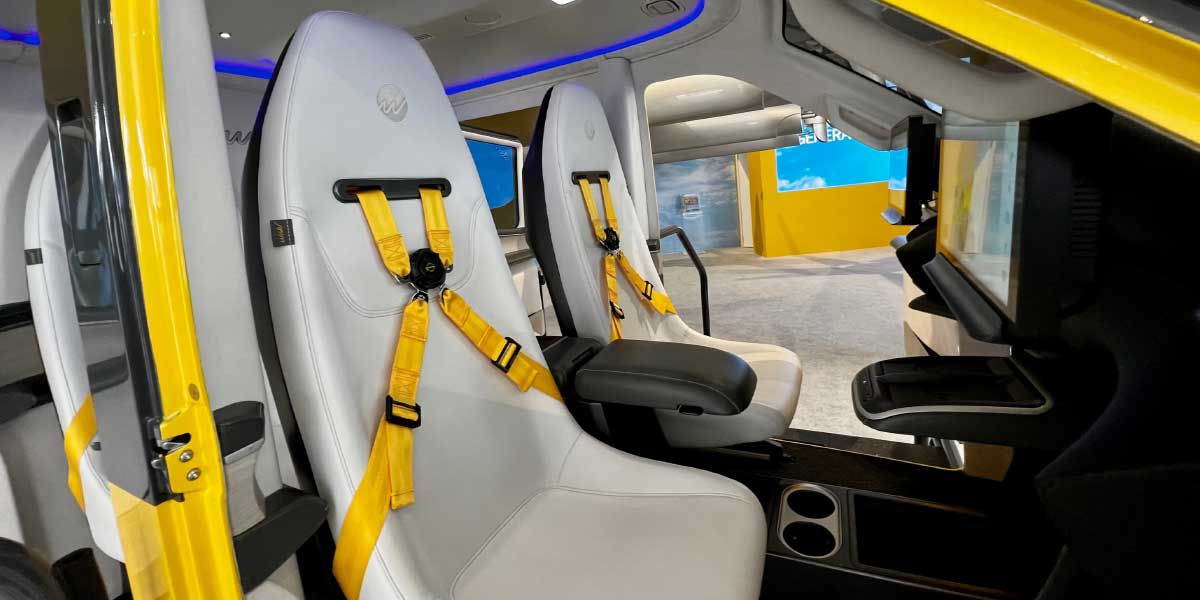
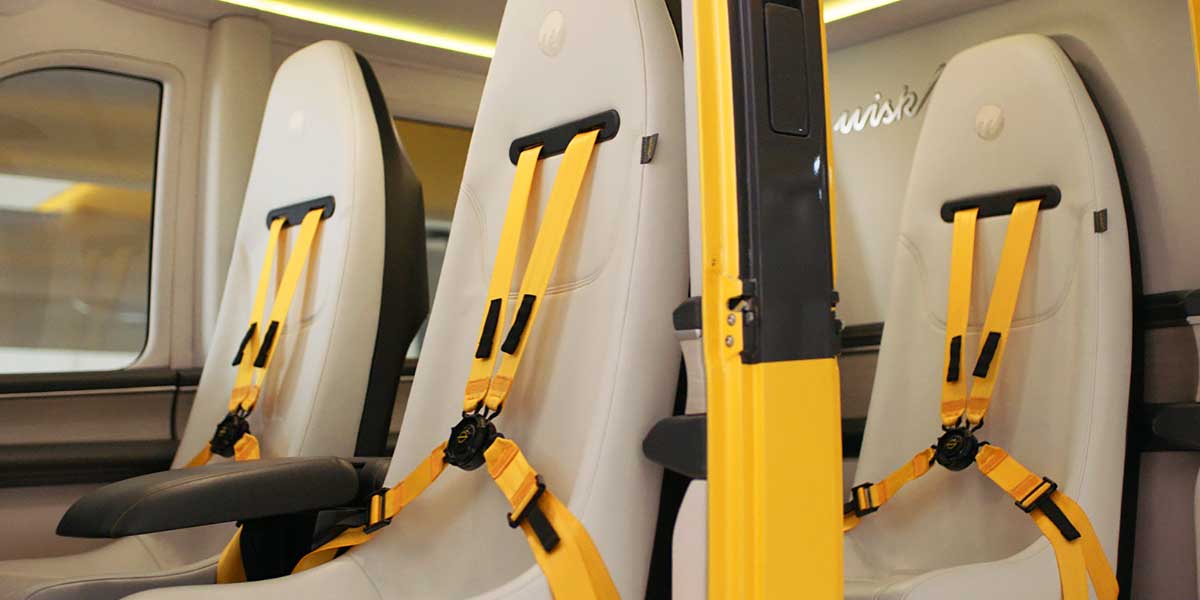
The cabin seats four in an automotive inspired arrangement. A panoramic windshield replaces a traditional cockpit. Digital interfaces display route, weather, and arrival data. USB C ports and Wi Fi keep passengers connected. Active noise cancellation supports a calm atmosphere.
Exterior clearance protects ground crews. Interior quietness elevates comfort. Together, design and engineering address commuter expectations in dense metropolitan hubs.
Pros and Cons:
Pros
- Fully autonomous Level 4 operation
- Boeing backed safety engineering
- Rapid 15 minute DC charging
- High payload at 408 kg
- Zero emissions electric propulsion
Cons
- Certification timeline remains extended
- Fleet only purchase model
- High capital cost per unit
- Infrastructure dependent on vertiport rollout
Market position & Expert Data:
According to Reuters, global advanced air mobility investment exceeded $8 billion in 2025. Data reveals accelerating regulatory momentum in the United States. Research shows Houston emerges as a pilot city for commercial air taxi trials. The aircraft competes with Joby and Archer in range and capacity.
McKinsey projects the urban air mobility market could reach $35 billion annually by 2030. That forecast strengthens premium positioning for autonomous configurations. According to industry analysts, pilotless systems lower long term operational expenses by up to 30 percent. Certification remains the decisive hurdle for 2026 deployment.
Conclusion:
Wisk Aero Generation 6 delivers autonomous electric flight aimed at metropolitan commuters. With 144 km range, 222 km/h speed, and a 120 kWh battery, it answers urban congestion with vertical mobility. Boeing backed engineering enhances trust. For cities preparing vertiports, it represents a calculated leap into electric air taxi operations.
Exterior and Interior photos of Wisk Aero Generation 6
Watch the Video Overview

Full Specifications List:
Model Specs
| Specification | Actual Data |
|---|---|
|
Model Name
|
Generation 6
|
|
Model Year
|
2026
|
|
Manufacturer
|
Wisk Aero, subsidiary of Boeing
|
|
Country of Origin
|
United States
|
|
Vehicle Class
|
Autonomous eVTOL Air Taxi
|
Performance
| Specification | Actual Data |
|---|---|
|
Power Type
|
All Electric Distributed Propulsion
|
|
Total Power Output
|
600 kW (805 hp)
|
|
Motor Configuration
|
12 Motors / 12 Propellers
|
|
Maximum Speed
|
222 km/h (138 mph / 120 knots)
|
|
Cruise Altitude
|
762 to 1,219 m (2,500 to 4,000 ft)
|
Battery and Charging
| Specification | Actual Data |
|---|---|
|
Battery Capacity
|
120 kWh
|
|
Fast Charging Time
|
15 minutes DC fast charge
|
Estimated Range Data
| Specification | Actual Data |
|---|---|
|
Flying Range
|
144 km (89 miles)
|
|
Road Range
|
0 km (0 miles)
|
Body Specifications
| Specification | Actual Data |
|---|---|
|
Wingspan
|
15.24 m (50 ft)
|
|
Length
|
8.5 m (27.9 ft)
|
|
Weight
|
1,088 kg (2,398 lbs)
|
|
Maximum Payload
|
408 kg (900 lbs)
|
Exterior Design Features
| Specification | Actual Data |
|---|---|
|
Airframe Material
|
Carbon Fiber Composite Structure
|
|
Propeller Layout
|
6 Tilting 5 Blade Front + 6 Fixed 4 Blade Rear
|
Interior Design and Materials
| Specification | Actual Data |
|---|---|
|
Seating Capacity
|
4 Passengers
|
|
Cabin Layout
|
Cockpit Free Autonomous Cabin
|
Cabin Technical Features
| Specification | Actual Data |
|---|---|
|
Autonomy Level
|
Level 4 Autonomous Flight System
|
|
Safety System
|
Triple Redundant Flight Stack + Whole Airframe Parachute
|
|
Connectivity
|
Onboard Wi Fi + USB C Ports
|
Comparison:
Wisk Aero Generation 6 lines up against AutoFlight eVTOL, CityAirbus NextGen, Supernal S-A2, and SkyDrive SD-05. Range, charging cadence, and price logic split this field into corridor runners and true city hoppers. Battery size also tells a blunt story about mission scope. And yet, each aircraft pushes zero emission urban air mobility in a slightly different direction.
| EV Model | PRICE (USD) | KEY FEATURES | EV PAGE |
|---|---|---|---|
|
Wisk Aero Generation 6
|
Model Year 2026, Manufactured in USA, Range 89.5 miles (144.0 km), Battery 120 kWh, Drive Type distributed electric propulsion, Top Speed 137.9 mph (222.0 km/h), Power 805.0 hp (600.3 kW). |
||
|
AutoFlight eVTOL
|
Model Year 2025, Manufactured in China, Range 155.3 miles (250.0 km), Battery 160 kWh, Drive Type lift and cruise distributed electric propulsion, Top Speed 124.3 mph (200.0 km/h), Power 536.0 hp (399.7 kW). |
View | |
|
CityAirbus NextGen
|
Model Year 2024, Manufactured in France, Range 49.7 miles (80.0 km), Battery 560 kWh, Drive Type all electric distributed propulsion, Top Speed 74.6 mph (120.0 km/h), Power 1,073.0 hp (800.1 kW). |
View | |
|
Supernal S-A2
|
Model Year 2026, Manufactured in USA, Range 60.3 miles (97.0 km), Battery 120 kWh, Drive Type distributed electric propulsion, Top Speed 119.9 mph (193.0 km/h), Power 600.0 hp (447.4 kW). |
View | |
|
SkyDrive SD-05
|
Model Year 2025, Manufactured in Japan, Range 9.3 miles (15.0 km), Battery 50 kWh, Drive Type distributed electric propulsion, Top Speed 62.1 mph (100.0 km/h), Power 241.0 hp (179.7 kW). |
View |
Range and Real World Usability for electric air taxi missions
Range shapes routing freedom, plain and simple. AutoFlight leads with 155.3 miles (250.0 km), so airport links and regional hops look realistic. CityAirbus stays metro focused at 49.7 miles (80.0 km). SkyDrive stays ultra local at 9.3 miles (15.0 km). Supernal targets midrange transfers at 60.3 miles (97.0 km). And Generation 6 sits at 89.5 miles (144.0 km), tuned for frequent, predictable autonomous legs.
Charging time and daily convenience at the vertiport
Charging time decides schedule density. CityAirbus publishes a 20 to 30 minute DC window to 80 percent, which favors short rotations. AutoFlight lists 45 minutes to 80 percent, more breathing room between departures. Supernal targets rapid 15 minute DC charging, pushing utilization higher. SkyDrive also posts 20 to 30 minutes, matching its short hop role. In real ops, consistent turnaround beats heroic specs.
Price positioning in the electric aircraft market
Price tells you who the buyer is and how the platform monetizes. CityAirbus opens at $1,200,000, a comparatively direct path into premium urban air mobility. AutoFlight and SkyDrive sit at $1,500,000, but they chase very different missions. Supernal lands at $2,500,000, signaling higher performance expectations and cabin utility. The $2,500,000 tier also expects stronger software maturity and dispatch discipline.
Value logic through battery, speed, and mission fit
Battery capacity can look counterintuitive, so context matters. CityAirbus carries 560 kWh yet delivers 49.7 miles (80.0 km), which hints at reserve strategy and heavy lift demands. AutoFlight pairs 160 kWh with 155.3 miles (250.0 km), an efficiency friendly corridor profile. SkyDrive runs 50 kWh for 9.3 miles (15.0 km), a rooftop shuttle mindset. Supernal uses 120 kWh for 60.3 miles (97.0 km), prioritizing balanced urban coverage.